AI, Art Valuation and the Question of Accountability: What Happens When The Algorithms Disagree?
AI, Art Valuation and the Question of Accountability: What Happens When The Algorithms Disagree?
Published in Trusts & Estates Magazine, February 2026
Automated valuation models are coming to fine art. Several technology firms now offer algorithmic tools that promise objective, data-driven valuations: faster, cheaper and free from the subjectivity that has always characterized appraisal practice. For attorneys and fiduciaries managing estates with significant art holdings, the appeal is obvious. So is the risk.
The promise of algorithmic objectivity in art valuation rests on a misunderstanding of how the market actually operates and of what makes an appraisal defensible when it matters most.
What the Algorithms Can Do
First, an honest concession. Artificial intelligence is already transforming appraisal practice, and usefully so. Our firm has recently appraised an archive of approximately 5,000 photographs for a charitable donation to a university research center. No cataloguing existed; the only documentation was handwritten inscriptions on the reverse of each print. Using an AI-powered workflow combining optical character recognition and structured data parsing, we completed comprehensive cataloguing in a single day, work that would have required approximately a month of manual transcription. The receiving institution got documentation far exceeding their expectations, at no additional cost to the estate.
This is what AI does well: transcription, data structuring, report formatting, compliance checking and research aggregation. It constitutes a significant portion of appraisal workflow, and automating it produces genuine efficiency gains. For routine insurance scheduling of lower-value works, algorithmic approaches may eventually become standard, much as automated valuation models are now accepted for certain categories of real estate.
None of this is controversial. The question is what happens when the stakes are higher.
The Data Problem
Art valuation algorithms depend on structured, comprehensive market data. The art market doesn’t provide this. Roughly half of all transactions occur privately, with prices either unreported or disclosed only through trusted professional relationships. Retail gallery prices, when obtainable, reflect asking prices, not realized prices, and the discount between the two varies significantly and is rarely documented.
The information that determines value at the upper end of the market is precisely the information that resists digitization. During a recent engagement involving works by Yayoi Kusama, auction comparables for seemingly identical paintings (same size, year, palette and medium) showed dramatic price variation. A specialist dealer explained that serious collectors evaluate the impasto by viewing the work from the side, a qualitative factor worth a significant percentage of the price. This information exists in no database. It was shared through a professional relationship built over years. No one is training an algorithm on it, because in the art market, information asymmetry is a competitive advantage.
The most valuable market intelligence in fine art comes from relationships, not searches. The higher up in the market you go, the more this is the case.
Real Estate Precedent
Real estate has a far larger, more developed valuation industry that’s been building automated valuation models (AVMs) for decades. Estate practitioners may be familiar with AVMs in that context because residential property is a common asset in estate administration. Real estate valuation is characterized by public records, standardized measurements, mandatory disclosure and massive datasets. Even in that environment, algorithmic valuation has structural limits.
Zillow invested billions developing its AVM platform. In 2021, the company launched Zillow Offers, purchasing homes based on its own automated valuations. Within months, the program had generated losses of $881 million and was shut down. The algorithm could process comparable sales data with extraordinary speed. What it couldn’t do was exercise judgment about condition, neighborhood trajectory or the dozens of qualitative factors that experienced appraisers weigh intuitively.
If automated valuation fails when data is abundant and properties are standardized, the structural limits in fine art (unique objects, limited comparables, opaque private markets, qualitative distinctions that resist quantification) aren’t temporary gaps awaiting technological solutions but features of how the market operates.
Competing Conclusions
The question that matters most for estate practitioners is straightforward: When two algorithmic tools produce different valuations for the same work (and they will), who decides which is correct?
The Internal Revenue Service doesn’t accept algorithmic output as a qualified appraisal. The Uniform Standards of Professional Appraisal Practice require that a qualified appraiser develop and take professional responsibility for the opinion of value. Treasury Regulation Section 1.170A-13(c)(3) requires that a qualified appraisal be conducted by a qualified appraiser or a person. A platform doesn’t qualify. These aren’t legacy requirements awaiting modernization. They reflect the structural logic of accountability in the tax and legal system.
An algorithm can’t be deposed. It can’t explain why it weighted one comparable over another. It can’t respond to an IRS examiner’s challenge to methodology, testify before a court as to why a particular authentication question affects market value or bear professional liability for a conclusion that exposes an estate to penalties.
Consider a practical example. A painting exists in what might be called a bifurcated authentication landscape: authenticated by one leading scholar and included in a forthcoming catalogue raisonné, but absent from an earlier catalogue that remains the standard recognized by major auction houses. The work can’t currently be sold at auction regardless of its quality or provenance. Comparable auction data exists for works by the same artist that are included in the recognized catalogue, but the authentication discount for works sold through private gallery channels is being established in real time, through a handful of negotiations among a small number of market participants.
Valuing such a work requires direct engagement with dealers, synthesis of conflicting market signals and a reasoned determination of how much of the observed price differential is attributable to authentication status versus other qualitative factors. It’s a judgment problem, the kind that defines actual valuation practice at the level where estates face material tax exposure.
Fiduciary Implications
For attorneys advising estates, trusts and charitable entities, the practical implications are significant.
An estate that relies on an algorithmic valuation for a charitable contribution appraisal above $5,000 doesn’t have a qualified appraisal under Treasury regulations. The deduction is at risk, and the penalties are significant. In 2021, the IRS Art Advisory Panel rejected 65% of appraisals reviewed for non-cash charitable donations. In Estate of Kollsman v. Commissioner, No. 18-70565 (Ninth Cir. Ct. of Appeals 2019), the court upheld a Tax Court ruling that the estate’s valuation by an auction house expert lacked objective evidence, resulting in over $500,000 in additional tax and penalties. An estate that relies on algorithmic output for Form 706 reporting faces potential challenge from the same Panel, which reviews all charitable donation claims exceeding $50,000 and a selection of estate tax returns. The Panel’s review is conducted by museum curators and scholars exercising precisely the kind of expert judgment that algorithms can’t replicate.
For fiduciaries, the duty of care requires reasonable reliance on qualified professionals. Algorithmic tools can strengthen that reliance. An appraiser using AI effectively produces more rigorous documentation, more comprehensive market analysis and a more defensible opinion of value. But the tools supplement the appraiser’s judgment. They don’t substitute for it, and treating them as if they do creates exposure.
Looking Ahead
As I see the future mapping out, AI will likely continue to transform the efficiency of appraisal practice. Documentation will improve. Research will accelerate. Routine valuations for lower-value works may eventually be handled algorithmically, with appropriate disclosure and regulatory acceptance, a development that would parallel the trajectory of AVMs in residential real estate.
What won’t change is the requirement for human judgment on works of material value, where authentication is contested, comparables are thin, markets are opaque and the consequences of an indefensible valuation fall on the trust or estate and its representatives. As mechanical work is automated, the role of the qualified appraiser becomes more essential. What remains is the judgment that algorithms can’t replicate and the accountability that the legal and tax systems require.
The question estate practitioners should be asking isn’t whether AI will replace qualified appraisers. For certain categories of work, it partially will, and that’s progress. The question is: when the algorithms disagree and the IRS, the court or opposing counsel demands an explanation, who do you want to have made the call?
Automated valuation models are coming to fine art. Several technology firms now offer algorithmic tools that promise objective, data-driven valuations: faster, cheaper and free from the subjectivity that has always characterized appraisal practice. For attorneys and fiduciaries managing estates with significant art holdings, the appeal is obvious. So is the risk.
The promise of algorithmic objectivity in art valuation rests on a misunderstanding of how the market actually operates and of what makes an appraisal defensible when it matters most.
What the Algorithms Can Do
First, an honest concession. Artificial intelligence is already transforming appraisal practice, and usefully so. Our firm has recently appraised an archive of approximately 5,000 photographs for a charitable donation to a university research center. No cataloguing existed; the only documentation was handwritten inscriptions on the reverse of each print. Using an AI-powered workflow combining optical character recognition and structured data parsing, we completed comprehensive cataloguing in a single day, work that would have required approximately a month of manual transcription. The receiving institution got documentation far exceeding their expectations, at no additional cost to the estate.
This is what AI does well: transcription, data structuring, report formatting, compliance checking and research aggregation. It constitutes a significant portion of appraisal workflow, and automating it produces genuine efficiency gains. For routine insurance scheduling of lower-value works, algorithmic approaches may eventually become standard, much as automated valuation models are now accepted for certain categories of real estate.
None of this is controversial. The question is what happens when the stakes are higher.
The Data Problem
Art valuation algorithms depend on structured, comprehensive market data. The art market doesn’t provide this. Roughly half of all transactions occur privately, with prices either unreported or disclosed only through trusted professional relationships. Retail gallery prices, when obtainable, reflect asking prices, not realized prices, and the discount between the two varies significantly and is rarely documented.
The information that determines value at the upper end of the market is precisely the information that resists digitization. During a recent engagement involving works by Yayoi Kusama, auction comparables for seemingly identical paintings (same size, year, palette and medium) showed dramatic price variation. A specialist dealer explained that serious collectors evaluate the impasto by viewing the work from the side, a qualitative factor worth a significant percentage of the price. This information exists in no database. It was shared through a professional relationship built over years. No one is training an algorithm on it, because in the art market, information asymmetry is a competitive advantage.
The most valuable market intelligence in fine art comes from relationships, not searches. The higher up in the market you go, the more this is the case.
Real Estate Precedent
Real estate has a far larger, more developed valuation industry that’s been building automated valuation models (AVMs) for decades. Estate practitioners may be familiar with AVMs in that context because residential property is a common asset in estate administration. Real estate valuation is characterized by public records, standardized measurements, mandatory disclosure and massive datasets. Even in that environment, algorithmic valuation has structural limits.
Zillow invested billions developing its AVM platform. In 2021, the company launched Zillow Offers, purchasing homes based on its own automated valuations. Within months, the program had generated losses of $881 million and was shut down. The algorithm could process comparable sales data with extraordinary speed. What it couldn’t do was exercise judgment about condition, neighborhood trajectory or the dozens of qualitative factors that experienced appraisers weigh intuitively.
If automated valuation fails when data is abundant and properties are standardized, the structural limits in fine art (unique objects, limited comparables, opaque private markets, qualitative distinctions that resist quantification) aren’t temporary gaps awaiting technological solutions but features of how the market operates.
Competing Conclusions
The question that matters most for estate practitioners is straightforward: When two algorithmic tools produce different valuations for the same work (and they will), who decides which is correct?
The Internal Revenue Service doesn’t accept algorithmic output as a qualified appraisal. The Uniform Standards of Professional Appraisal Practice require that a qualified appraiser develop and take professional responsibility for the opinion of value. Treasury Regulation Section 1.170A-13(c)(3) requires that a qualified appraisal be conducted by a qualified appraiser or a person. A platform doesn’t qualify. These aren’t legacy requirements awaiting modernization. They reflect the structural logic of accountability in the tax and legal system.
An algorithm can’t be deposed. It can’t explain why it weighted one comparable over another. It can’t respond to an IRS examiner’s challenge to methodology, testify before a court as to why a particular authentication question affects market value or bear professional liability for a conclusion that exposes an estate to penalties.
Consider a practical example. A painting exists in what might be called a bifurcated authentication landscape: authenticated by one leading scholar and included in a forthcoming catalogue raisonné, but absent from an earlier catalogue that remains the standard recognized by major auction houses. The work can’t currently be sold at auction regardless of its quality or provenance. Comparable auction data exists for works by the same artist that are included in the recognized catalogue, but the authentication discount for works sold through private gallery channels is being established in real time, through a handful of negotiations among a small number of market participants.
Valuing such a work requires direct engagement with dealers, synthesis of conflicting market signals and a reasoned determination of how much of the observed price differential is attributable to authentication status versus other qualitative factors. It’s a judgment problem, the kind that defines actual valuation practice at the level where estates face material tax exposure.
Fiduciary Implications
For attorneys advising estates, trusts and charitable entities, the practical implications are significant.
An estate that relies on an algorithmic valuation for a charitable contribution appraisal above $5,000 doesn’t have a qualified appraisal under Treasury regulations. The deduction is at risk, and the penalties are significant. In 2021, the IRS Art Advisory Panel rejected 65% of appraisals reviewed for non-cash charitable donations. In Estate of Kollsman v. Commissioner, No. 18-70565 (Ninth Cir. Ct. of Appeals 2019), the court upheld a Tax Court ruling that the estate’s valuation by an auction house expert lacked objective evidence, resulting in over $500,000 in additional tax and penalties. An estate that relies on algorithmic output for Form 706 reporting faces potential challenge from the same Panel, which reviews all charitable donation claims exceeding $50,000 and a selection of estate tax returns. The Panel’s review is conducted by museum curators and scholars exercising precisely the kind of expert judgment that algorithms can’t replicate.
For fiduciaries, the duty of care requires reasonable reliance on qualified professionals. Algorithmic tools can strengthen that reliance. An appraiser using AI effectively produces more rigorous documentation, more comprehensive market analysis and a more defensible opinion of value. But the tools supplement the appraiser’s judgment. They don’t substitute for it, and treating them as if they do creates exposure.
Looking Ahead
As I see the future mapping out, AI will likely continue to transform the efficiency of appraisal practice. Documentation will improve. Research will accelerate. Routine valuations for lower-value works may eventually be handled algorithmically, with appropriate disclosure and regulatory acceptance, a development that would parallel the trajectory of AVMs in residential real estate.
What won’t change is the requirement for human judgment on works of material value, where authentication is contested, comparables are thin, markets are opaque and the consequences of an indefensible valuation fall on the trust or estate and its representatives. As mechanical work is automated, the role of the qualified appraiser becomes more essential. What remains is the judgment that algorithms can’t replicate and the accountability that the legal and tax systems require.
The question estate practitioners should be asking isn’t whether AI will replace qualified appraisers. For certain categories of work, it partially will, and that’s progress. The question is: when the algorithms disagree and the IRS, the court or opposing counsel demands an explanation, who do you want to have made the call?
Author: Tobias Czudej
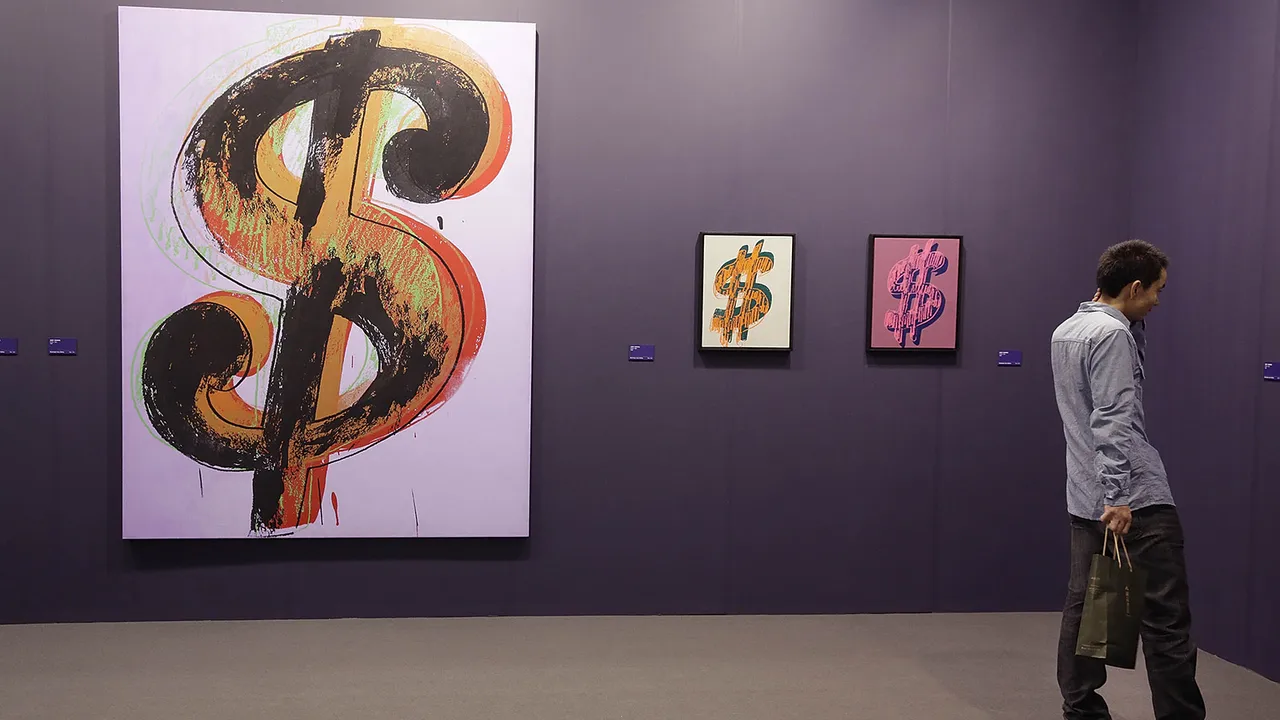
Image: Andy Warhol. Jessica Hromas/Getty Images Entertaiment/Getty Images
03.18.2026