The Collector: Muriel Kallis Steinberg Newman
The Collector02.25.2026
The Chicago philanthropist Muriel Kallis Steinberg Newman collected art, but in equal measure she collected the gossip, the anecdotes, the juicy little tidbits of the artists who made it. There were stories that she never tired of sharing, like the time she ran into Mark Rothko on the street and bought a painting fresh off the easel; When Franz Kline invited her to the Metropolitan Museum to study Ingres drawings; How Willem de Kooning had the most awful teeth but also supposedly wanted her to run away to Europe with him. [1] In 2007, talking with the Met curator Gary Tinterow, Newman alluded to the Kline story, saying, “But at the time I was married, so I couldn’t do that.” [2]
Newman was born in Chicago on February 25, 1914, the only child of Maurice and Ada Nudelman Kallis. Her family was well established in the city, and as a child, she learned to paint. She later took courses at the School of the Art Institute of Chicago, the University of Chicago, and the Illinois Institute of Technology’s Institute of Design, but did not graduate. She was commissioned to paint life-size oil portraits and showed a talent for capturing likenesses.
In 1938, she married Jay Z. Steinberg, a pianist who worked for his father’s metal fabrication company. Once their son, Glenn, was in school, the couple took frequent trips to New York. On one such trip in 1949, Muriel ran into Hugo Weber, a professor of hers at the Institute of Design. He took her to The Club, a loft at 39 East Eighth Street populated by downtown artists and writers. Smart, stylish, and svelte, Newman was a presence, even amongst this crowd of personalities.
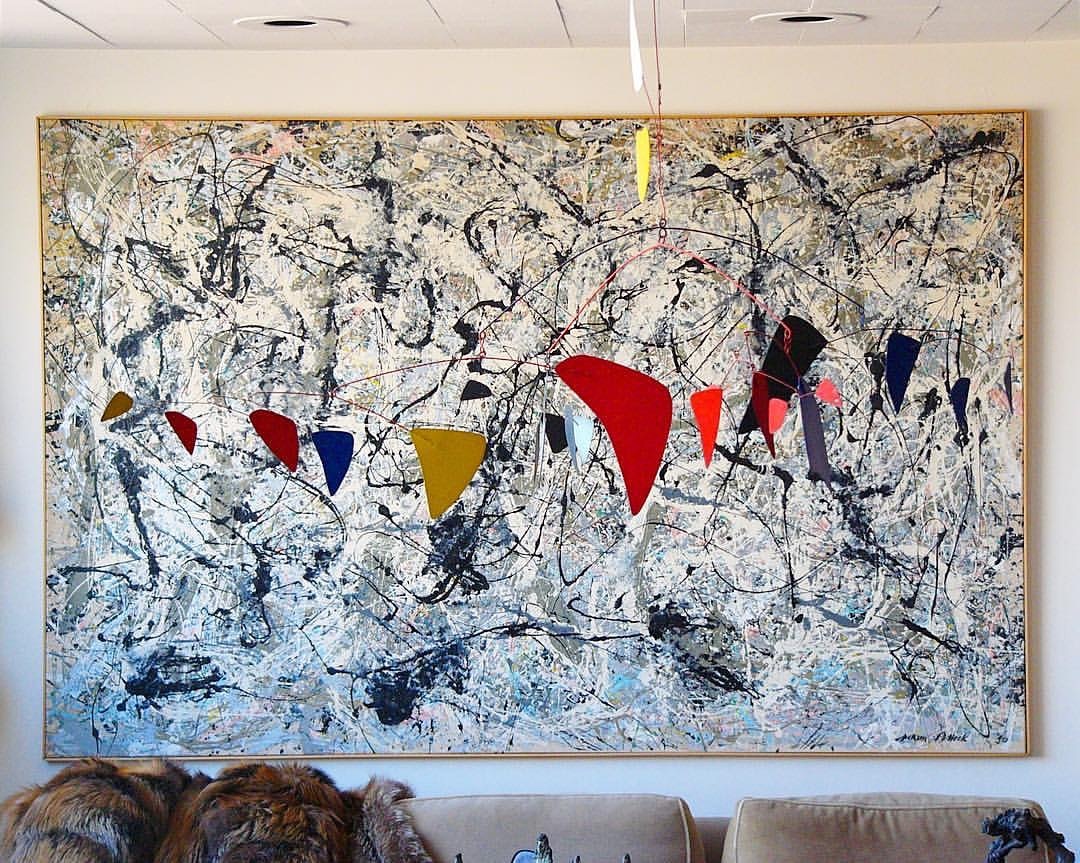
The core of Newman’s collection was purchased between 1949 and 1954. In the early ‘50s, she bought European modernists like Pablo Picasso, Juan Gris, Fernand Léger, Jean Arp, and Alberto Giacometti. Within a few years, she’d turned her attention to emerging artists in America. She paid $2,700 for de Kooning’s “Attic” and bought Pollock’s large masterpiece “Number 28” (1950) for $3,000 from Sidney Janis Gallery in 1953. At the close of the decade, Newman began buying works by color field painters like Kenneth Noland and Morris Louis. Unlike many other collectors at the time, she did not use an adviser, relying instead on her own excellent taste. Per the dealer John Bernard Myers, “Muriel bought with her eyes and not with her ears.” [3]
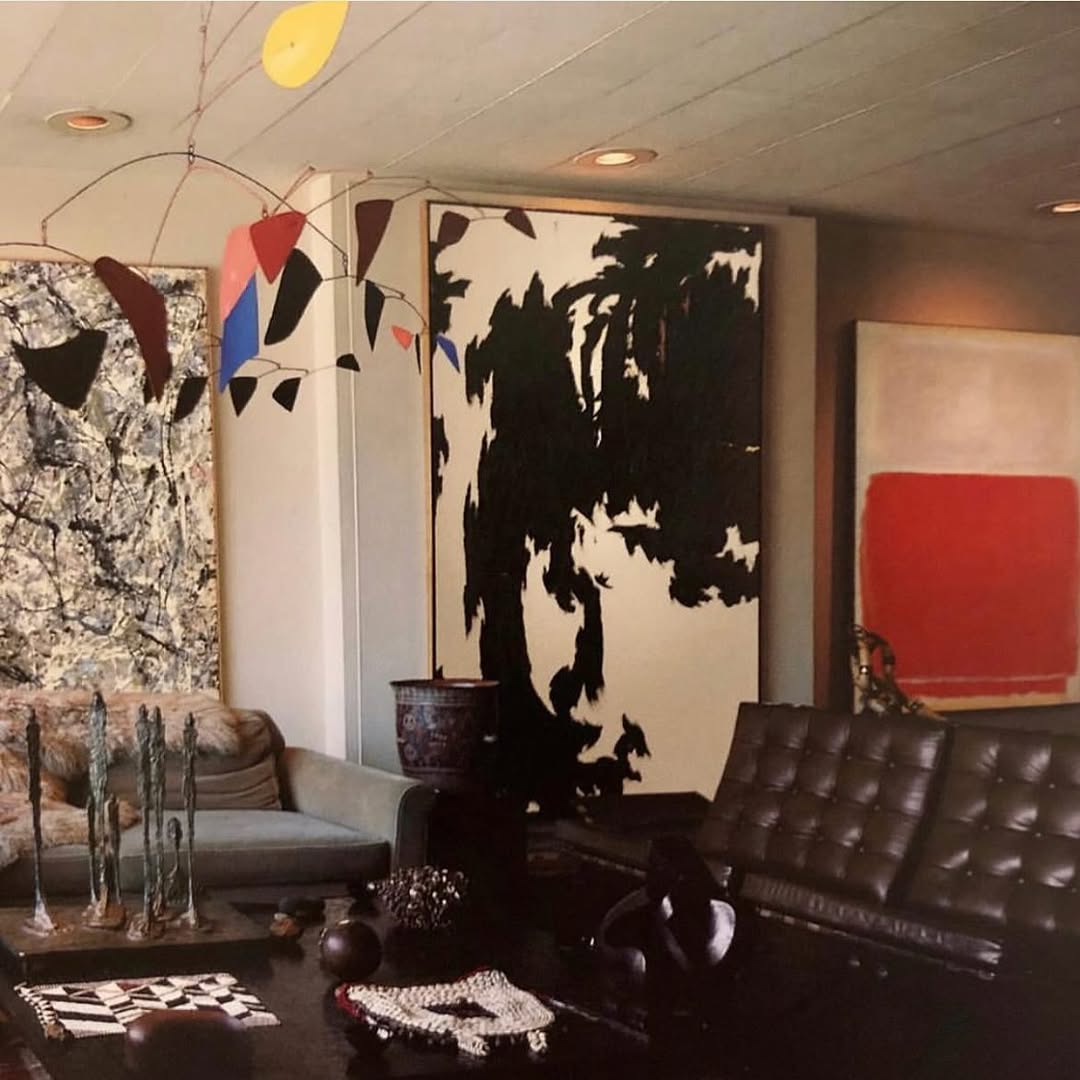
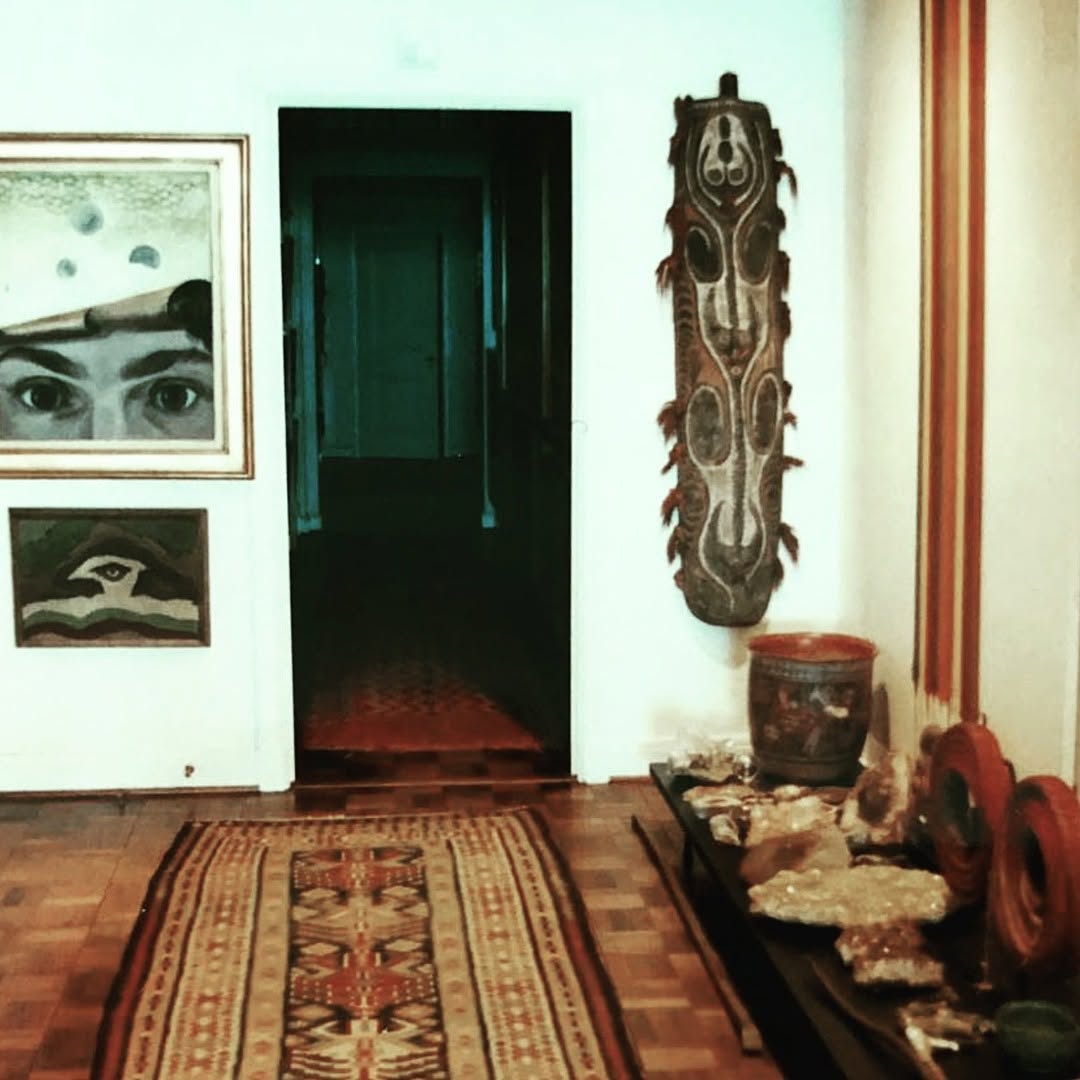
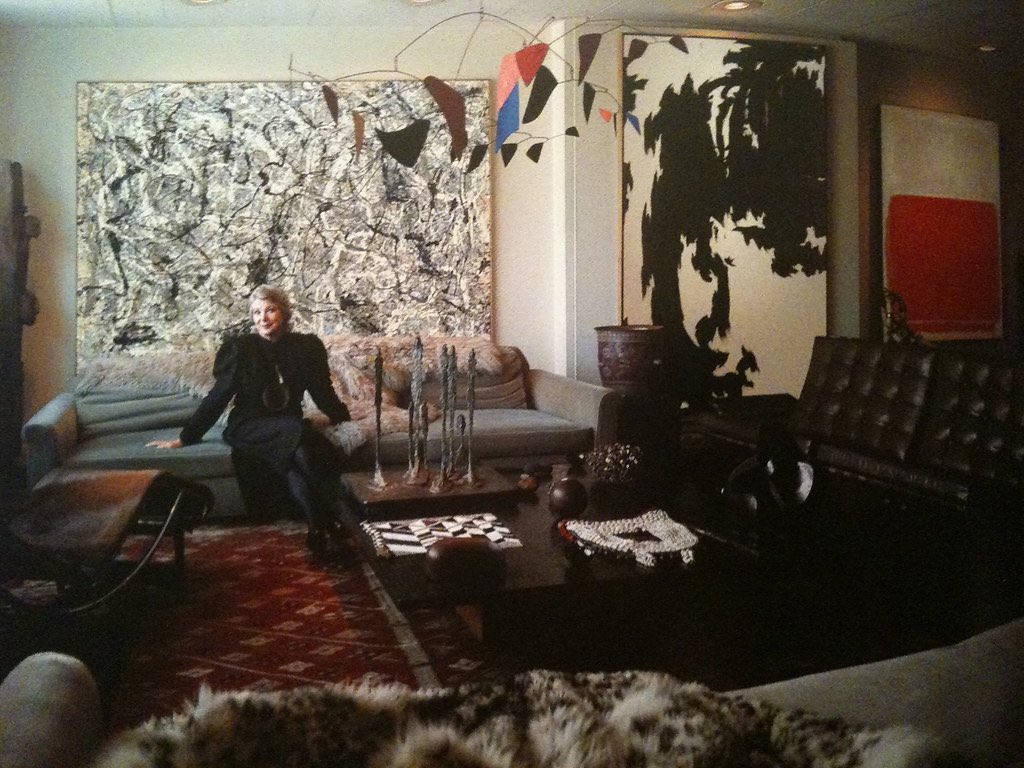
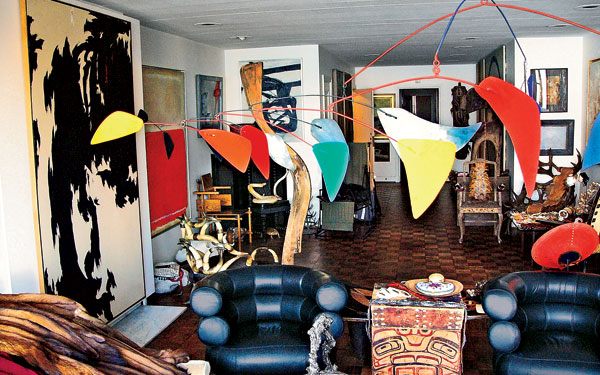
Muriel temporarily stopped collecting after Jay Steinberg died in 1954. The next year, she married Albert Hardy Newman, a Chicago real-estate developer and investor. The couple traveled the world together, and Muriel picked up textiles, jewelry, and other art objects along the way. By the early 1970s, the Newmans were a popular couple in the city’s art circuit. They frequently hosted parties after openings and invited out-of-town collectors to view the artwork on display at their light-filled apartment at 3750 North Lake Shore Drive in Chicago.
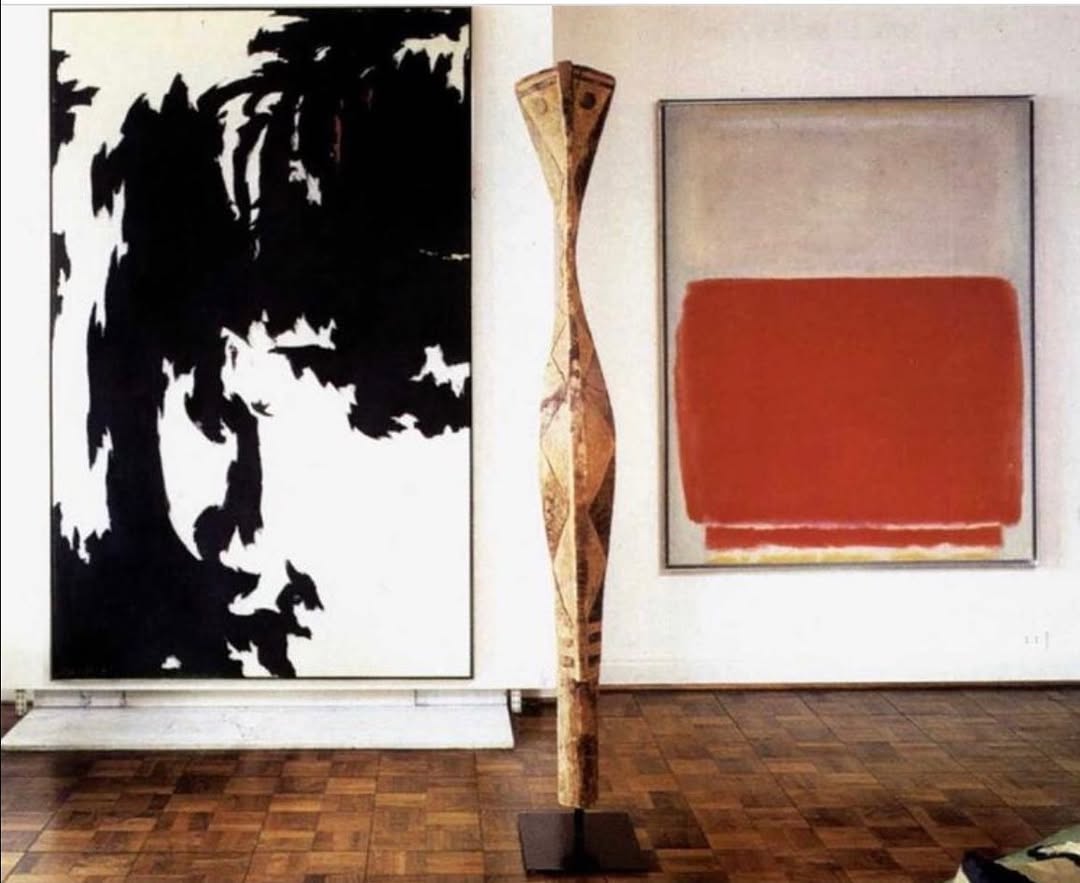
In 1980, Newman caused a minor scandal when she bequeathed 63 abstract expressionist masterpieces, not to an institution in her hometown, but to the Metropolitan Museum of Art in New York. (In 1980, the collection’s estimated value was between $12 million and $15 million; at the time of Newman’s death, it was valued in the hundreds of millions.) “This was a collection of New York art, and I had always felt it belonged in New York,” she said. [1] In 2004, when Newman was in her early 90s, she asked the Met to pick up the paintings; she was ready to part with works like Pollock’s “Number 28,” de Kooning’s “Attic,” Robert Motherwell’s “Elegy to the Spanish Republic No. 35,” and Kline’s “Nijinsky.” [4] Newman did leave artwork for institutions in her hometown, donating over 170 works to the School of the Art Institute, among them Jasper Johns’ “Near the Lagoon” (2002).
That same year, Newman described herself as a “failed artist.” “I’m not really a collector,” she added. ”Buying art is really a sublimation for me.” [5]
SOURCES
[1] “Queen of Arts.” Chicago Magazine. June 23, 2009
https://www.chicagomag.com/chicago-magazine/june-2009/queen-of-arts/
[2]Tinterow, Gary, Mintz Messinger, Lisa & Rosenthal, Nan. (Eds.). (2007) “Abstract Expressionism and Other Modern Works: The Muriel Kallis Steinberg Newman Collection in the Metropolitan Museum of Art.” Yale University Press and The Metropolitan Museum of Art
[3] Lieberman, William S. (Ed.). (1981). “An American Choice: The Muriel Kallis Steinberg Newman Collection.” The Metropolitan Museum of Art
[4] Hevesi, Dennis. “Muriel Kallis Steinberg Newman, Donor of Abstract Expressionist Works to the Met, Dies at 94.” The New York Times. September 4, 2008.
https://www.nytimes.com/2008/09/05/arts/design/05newman.html
[5] “Art: Muriel’s $12 Million Sublimation.” Time. December 22, 1980
https://time.com/archive/6858501/art-muriels-12-million-sublimation/
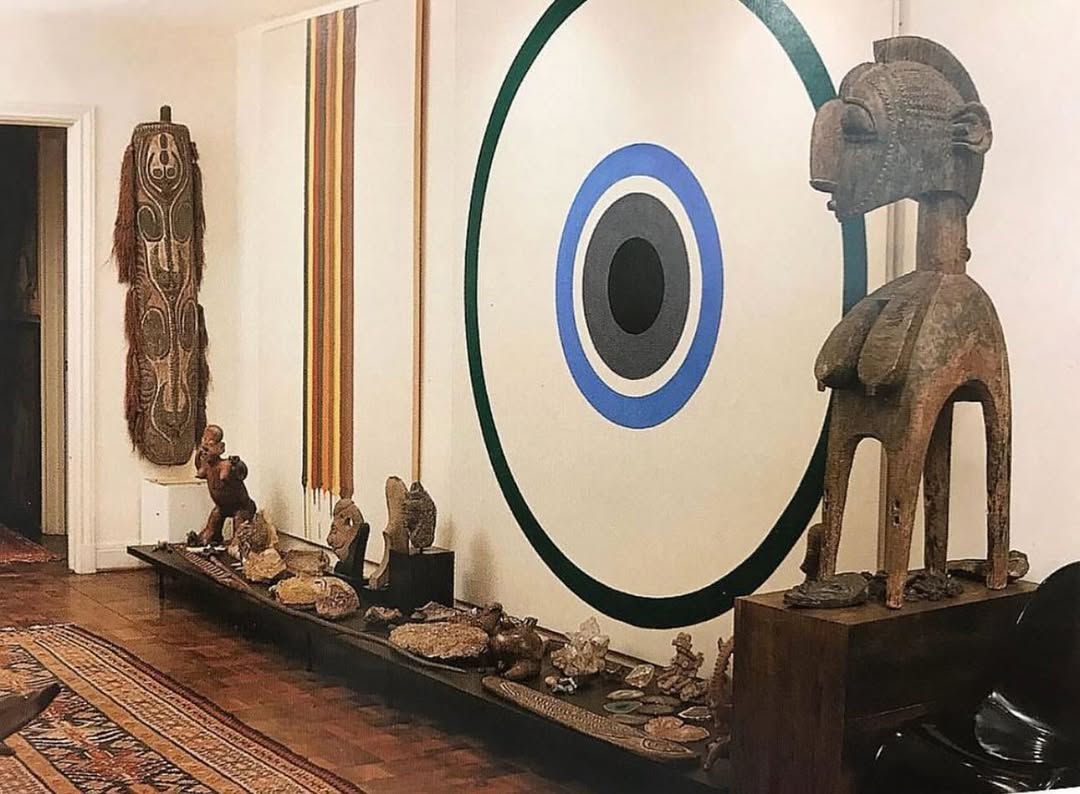
Image: Morris Louis, “Pungent Distances” (1961); Kenneth Noland, “October” (1961); African and Oceanic objects including a late 19th–early 20th century shield by the Angoram people of Papua New Guinea, Kanduanam village