The Collectors : Walter and Louise Arensberg
The Collectors : Walter and Louise Arensberg
Walter and Louise Arensberg were intrepid collectors of contemporary art in the first half of the 20th century. Today their collection forms the centerpiece of the modern art holdings at the Philadelphia Museum of Art.
Raised in Pittsburgh, where his father ran a steel manufacturing business, Walter studied English and philosophy at Harvard before traveling in Europe for a couple of years. He briefly worked as a reporter for The Evening Post in New York and published several volumes of experimental poetry. He returned to Boston in 1907 and married Mary Louise Stevens, whose wealthy textile manufacturing family had emigrated from Dresden in the early 1880s. [1]
The Arensbergs’ entryway into art collecting was the 1913 Armory Show, a blockbuster exhibition that introduced Americans to avant-garde European art. The couple acquired several pieces from the exhibition, including lithographs by Paul Cézanne and Paul Gauguin, as well as a small work by Jacques Villon (the eldest brother of Duchamp) on the insistence of art historian and critic Walter Pach, who helped organize the show and advised the Arensbergs. [Ibid.]
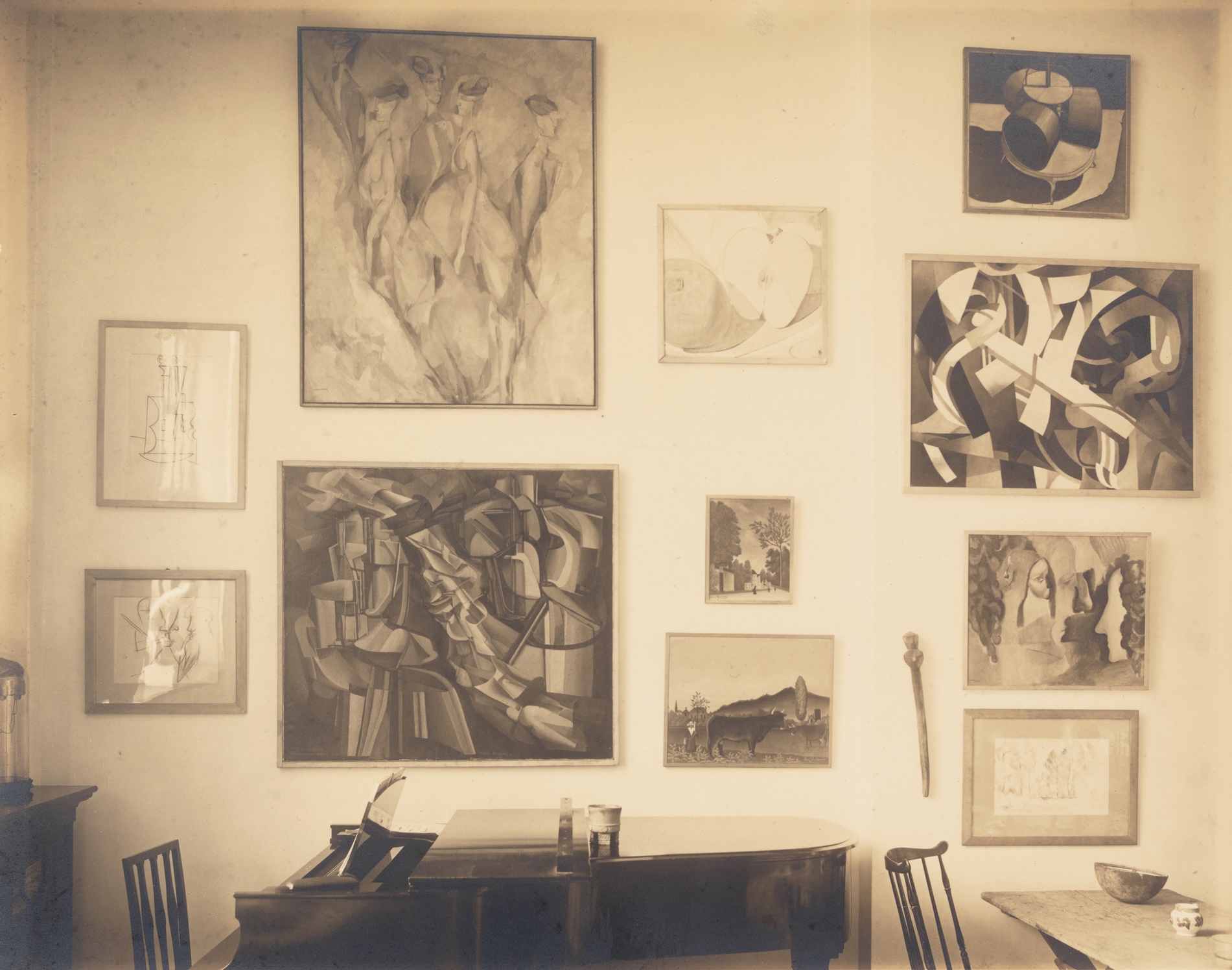
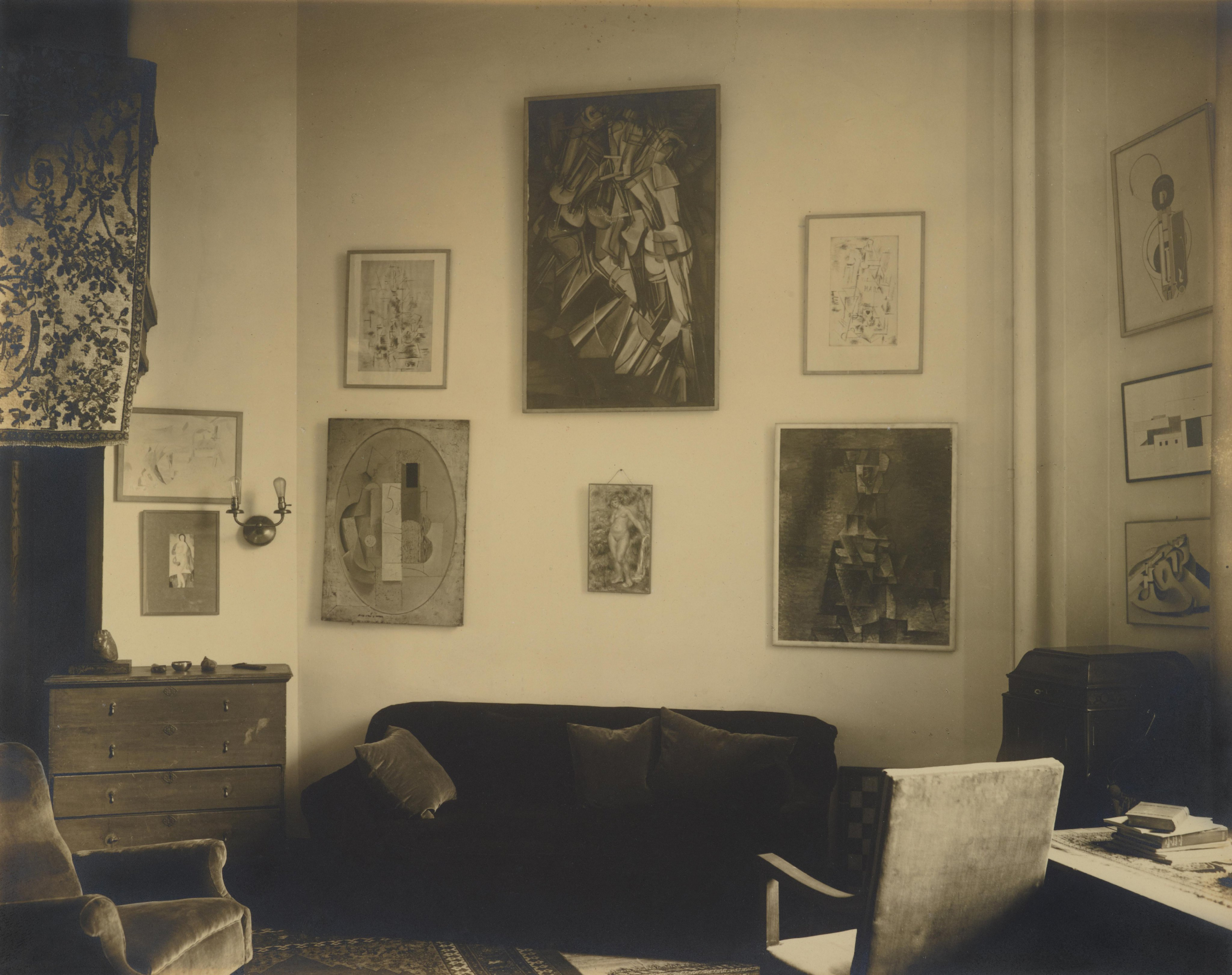
Walter, in particular, was taken with Duchamp’s “Nude Descending a Staircase (No. 2)” (1912). Initially ridiculed by many critics, the piece sold for $324 to a Californian art and antiquities dealer, Frederick C. Torrey. After the Armory show, the Arensbergs moved from Massachusetts to New York to be closer to the contemporary art scene, and they hosted legendary salons at their apartment at 33 West 67th Street. Drawing from mutual trust funds, the couple rapidly acquired art.
In the summer of 1915, the Arensbergs set up Duchamp in a studio apartment in their West 67th Street building. The rent was exchanged for the ownership of his masterpiece “The Bride Stripped Bare by Her Bachelors, Even.” The couple soon became the leading collectors of Duchamp, even commissioning him to create a full-scale copy of “Nude Descending a Staircase.” [2] The Arensbergs finally purchased the original “Nude" from Torrey in 1919. Walter collaborated with Duchamp on several readymade artworks, including “Comb” (1916) and “With Hidden Noise” (1916), wherein Walter inserted an unidentified object into a ball of twine screwed between two brass plates.
In 1921, the couple moved to California and sold “The Bride Stripped Bare by Her Bachelors, Even.” “It was the single greatest regret of their life that they sold it to [painter and patron] Katherine Dreier,” according to author Mark Nelson, “and the one thing they wanted back desperately.” [3]
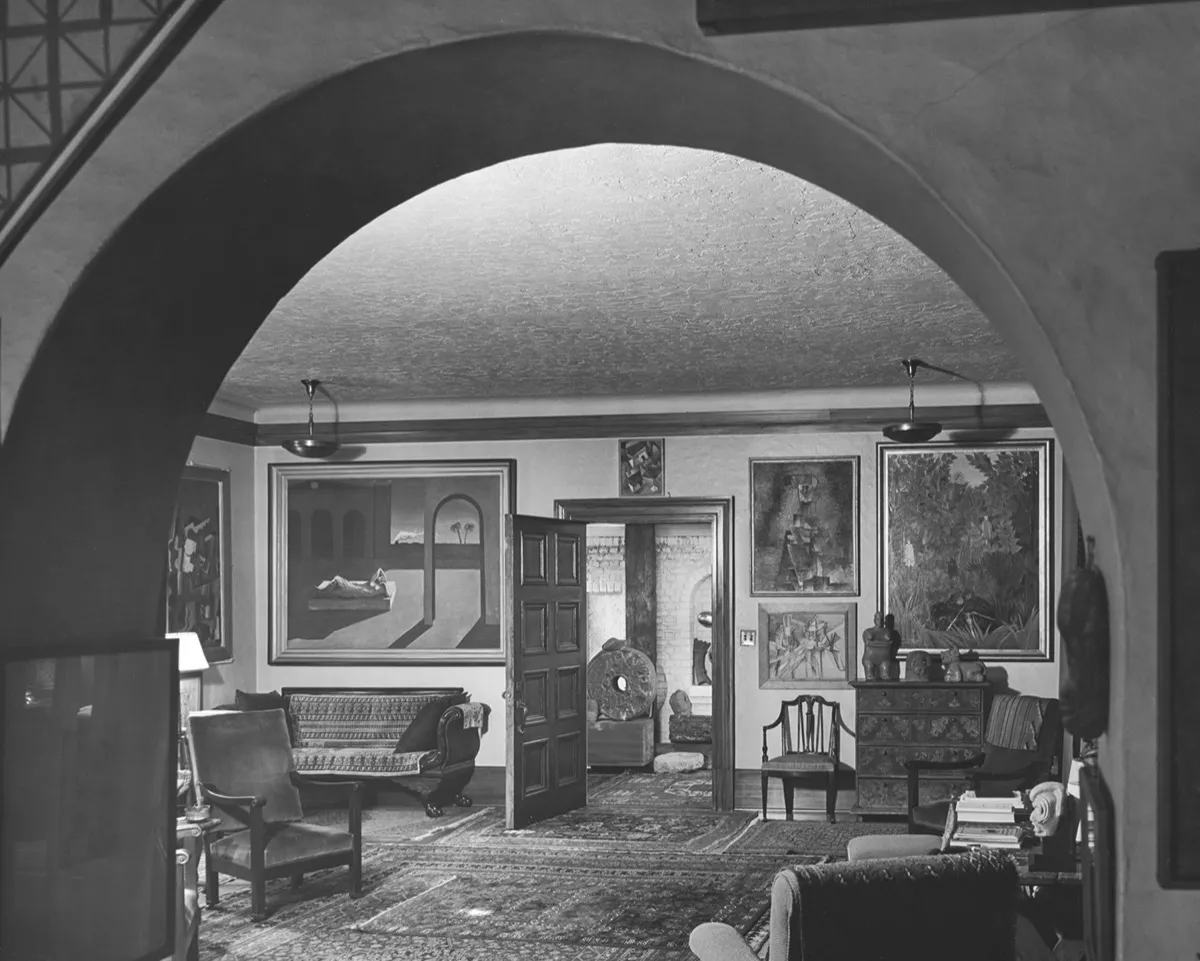
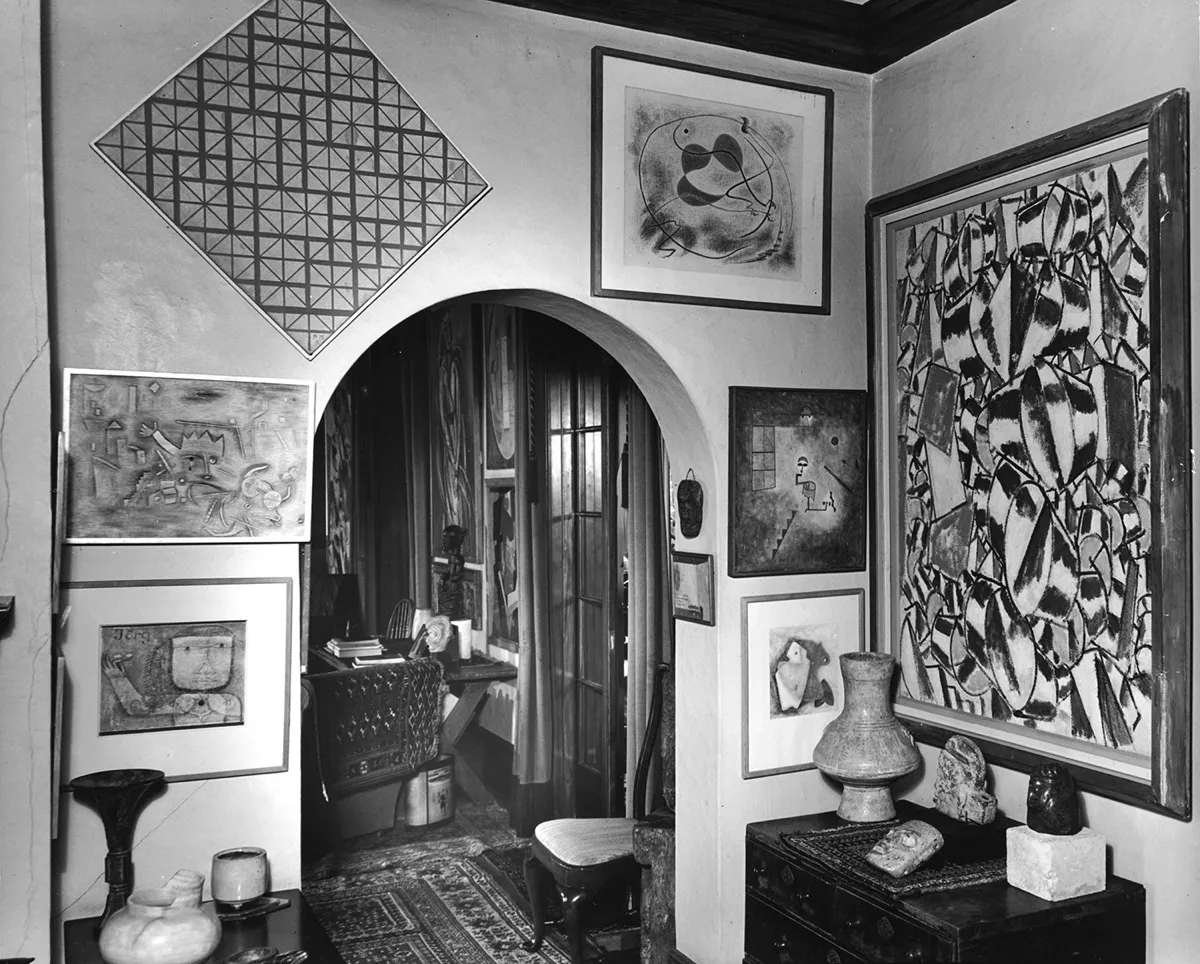
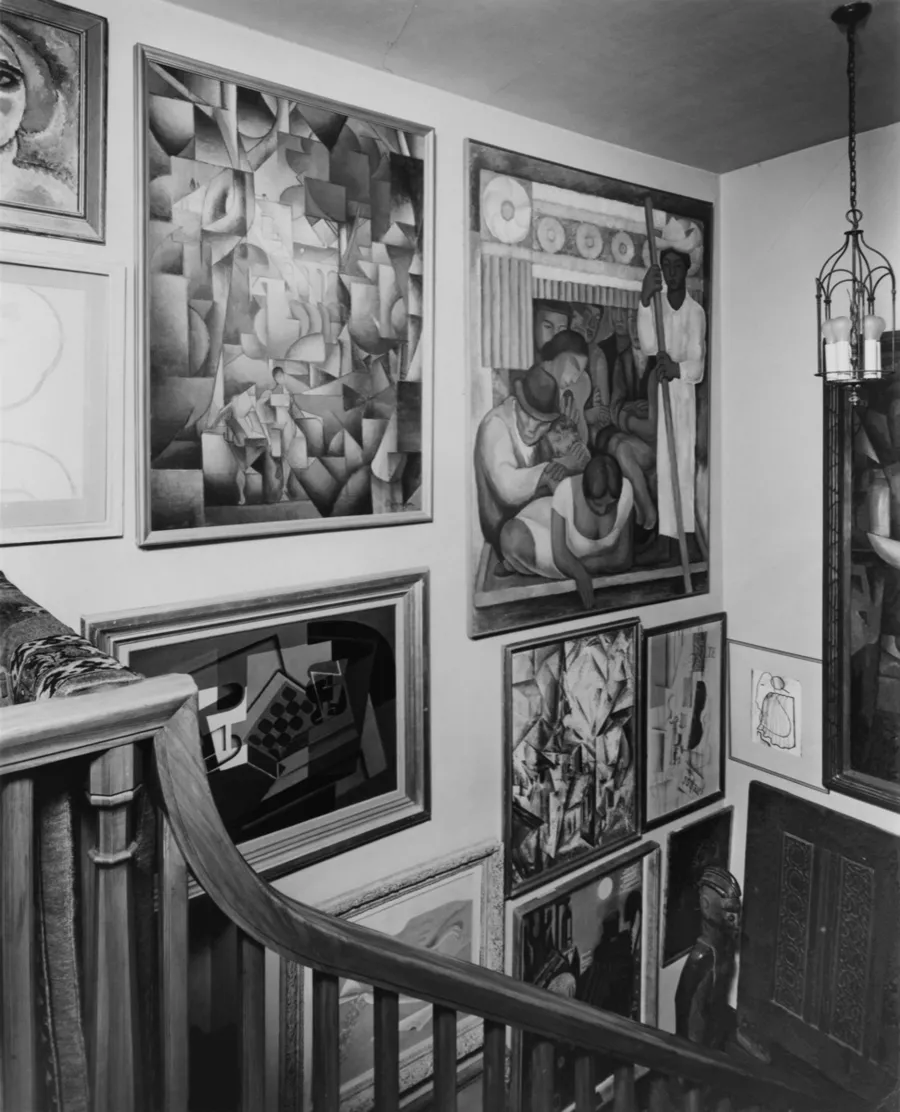
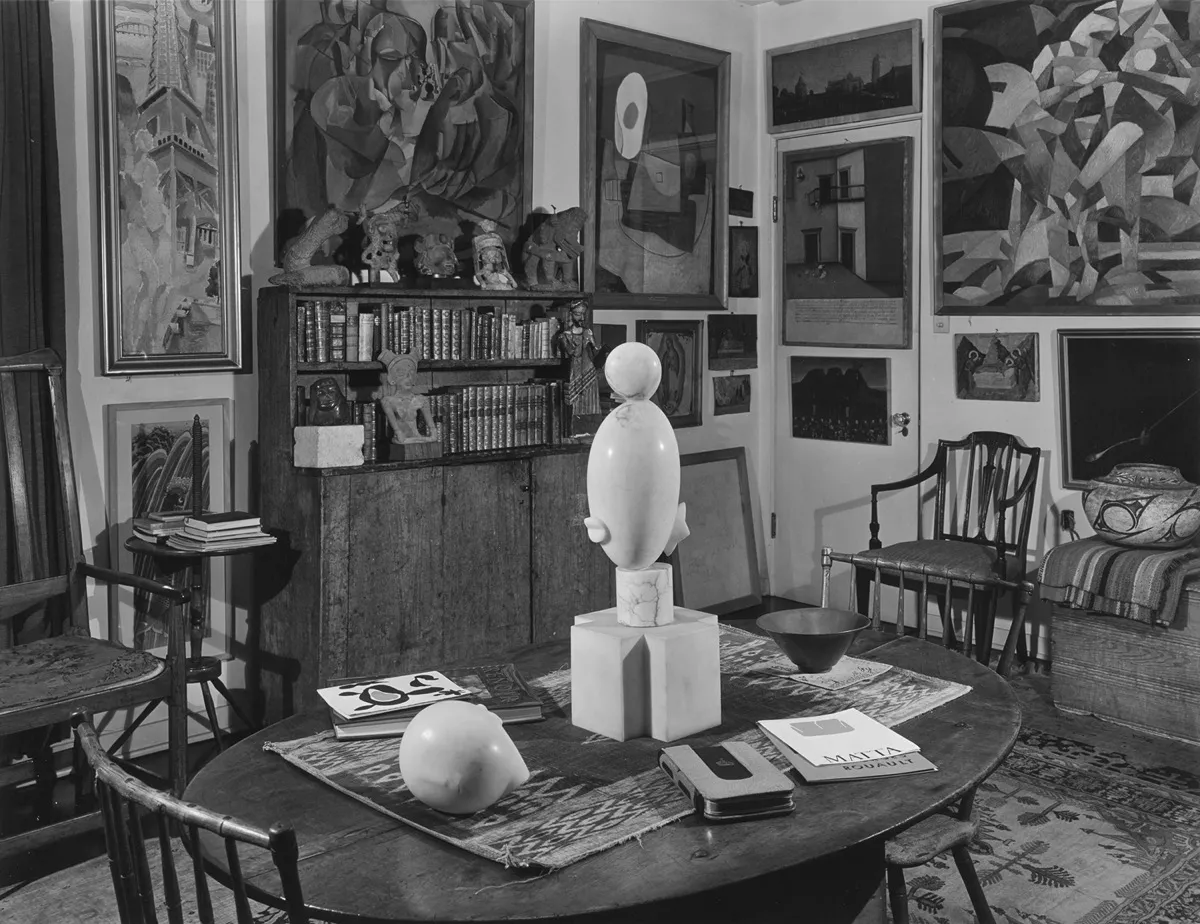
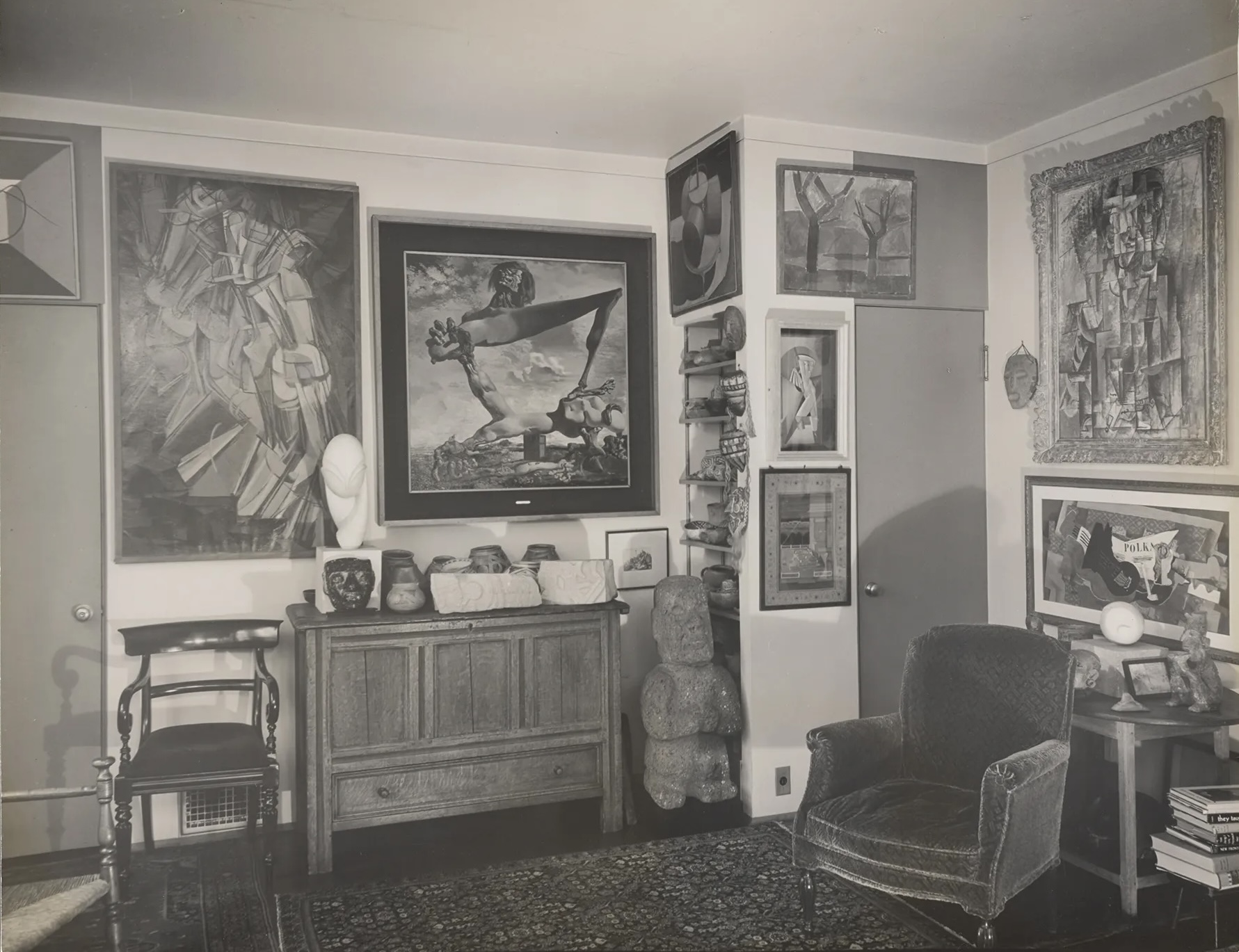
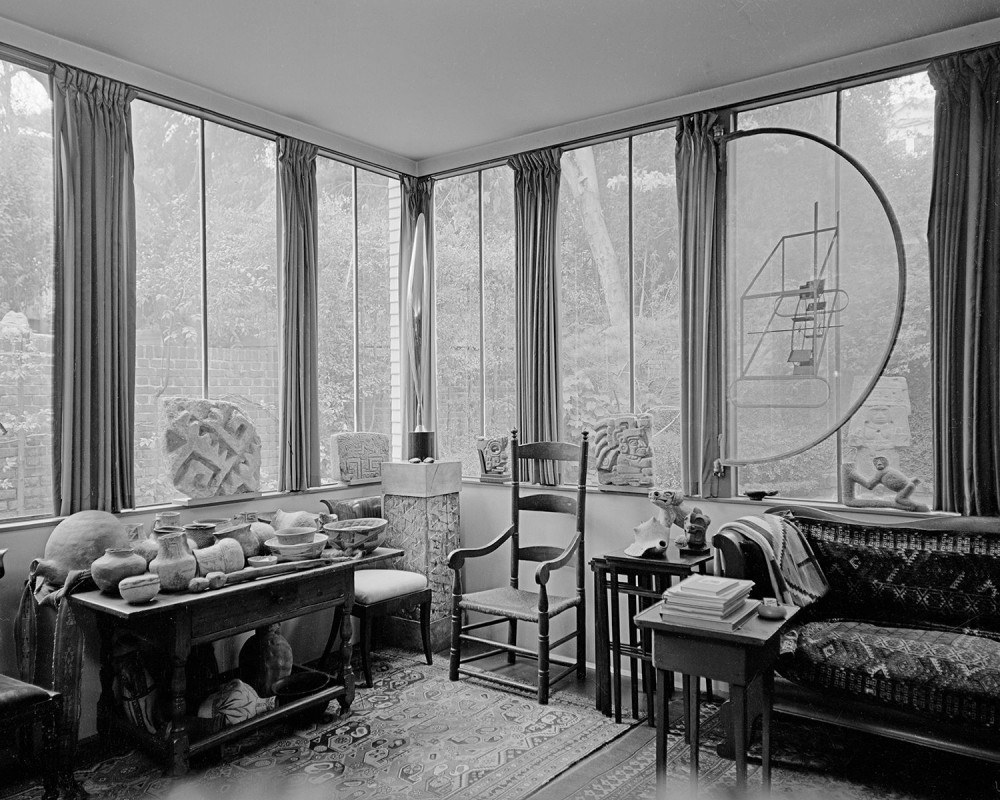
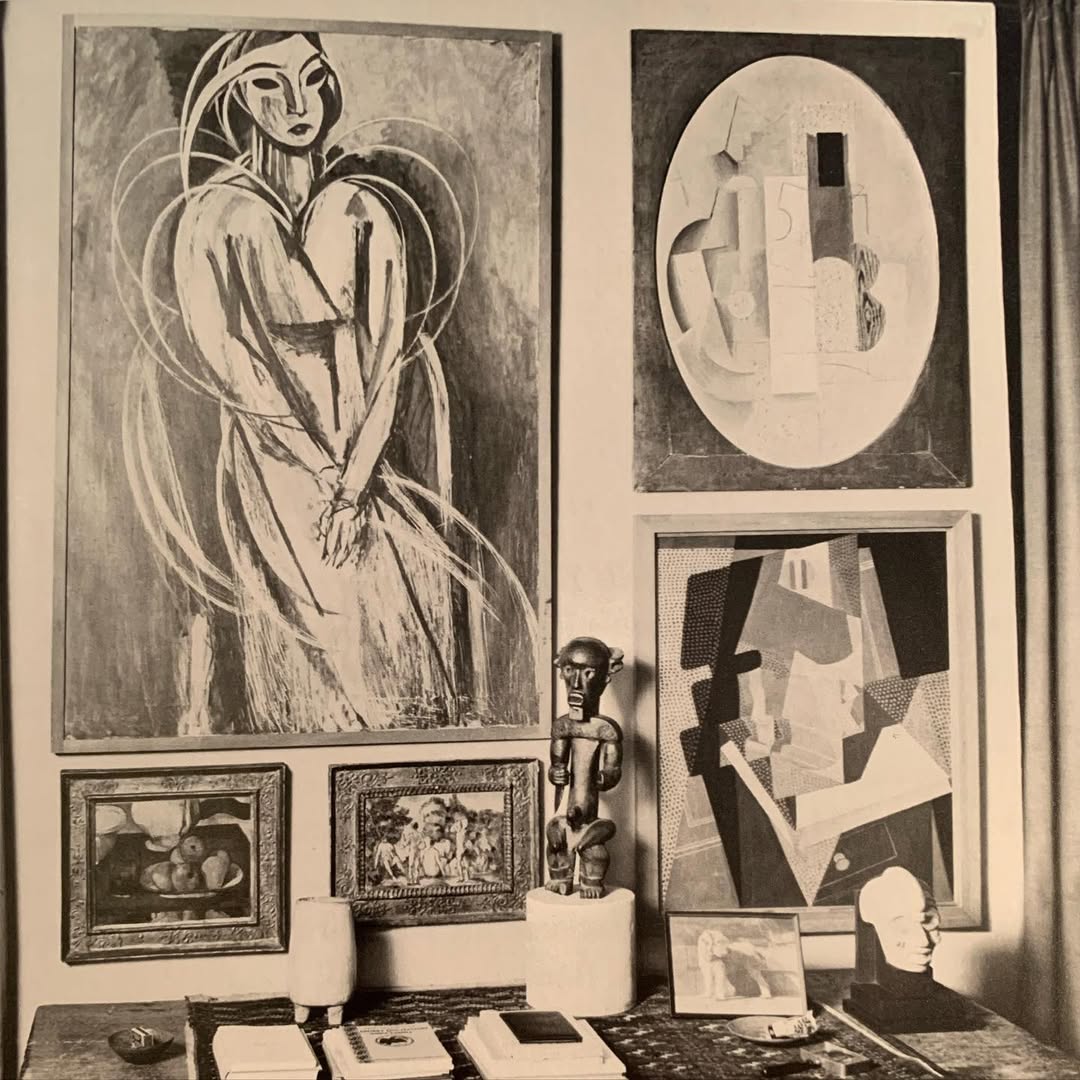
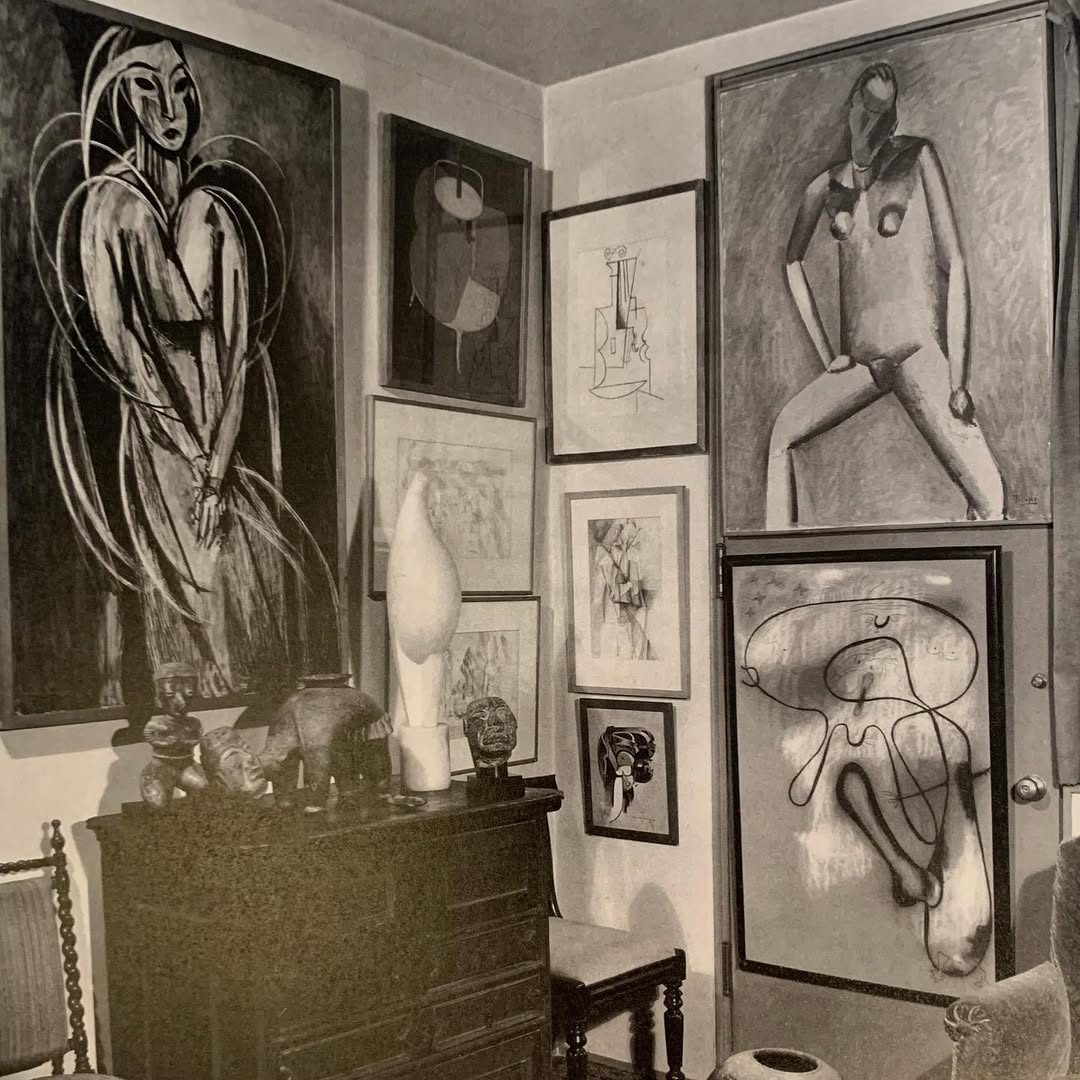
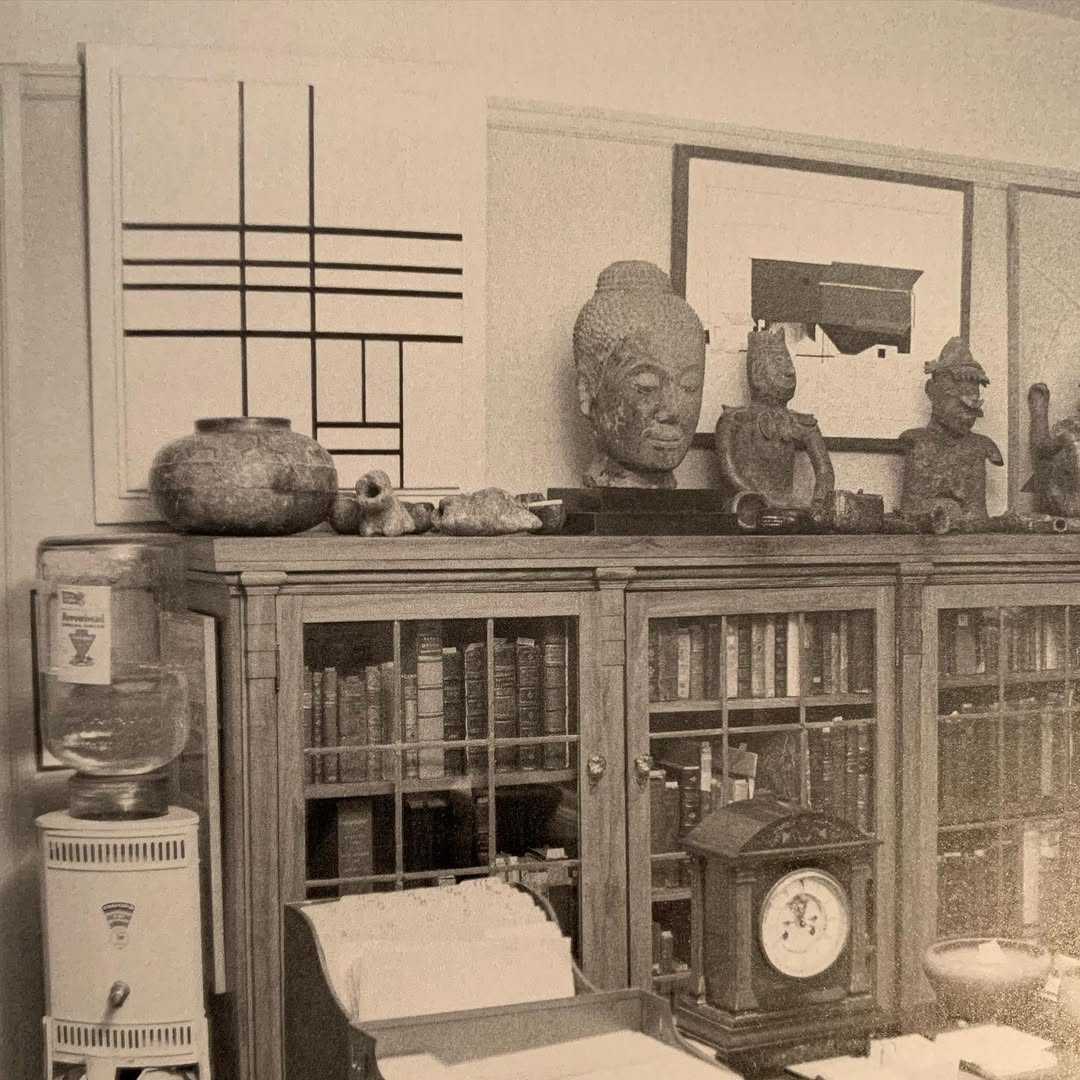
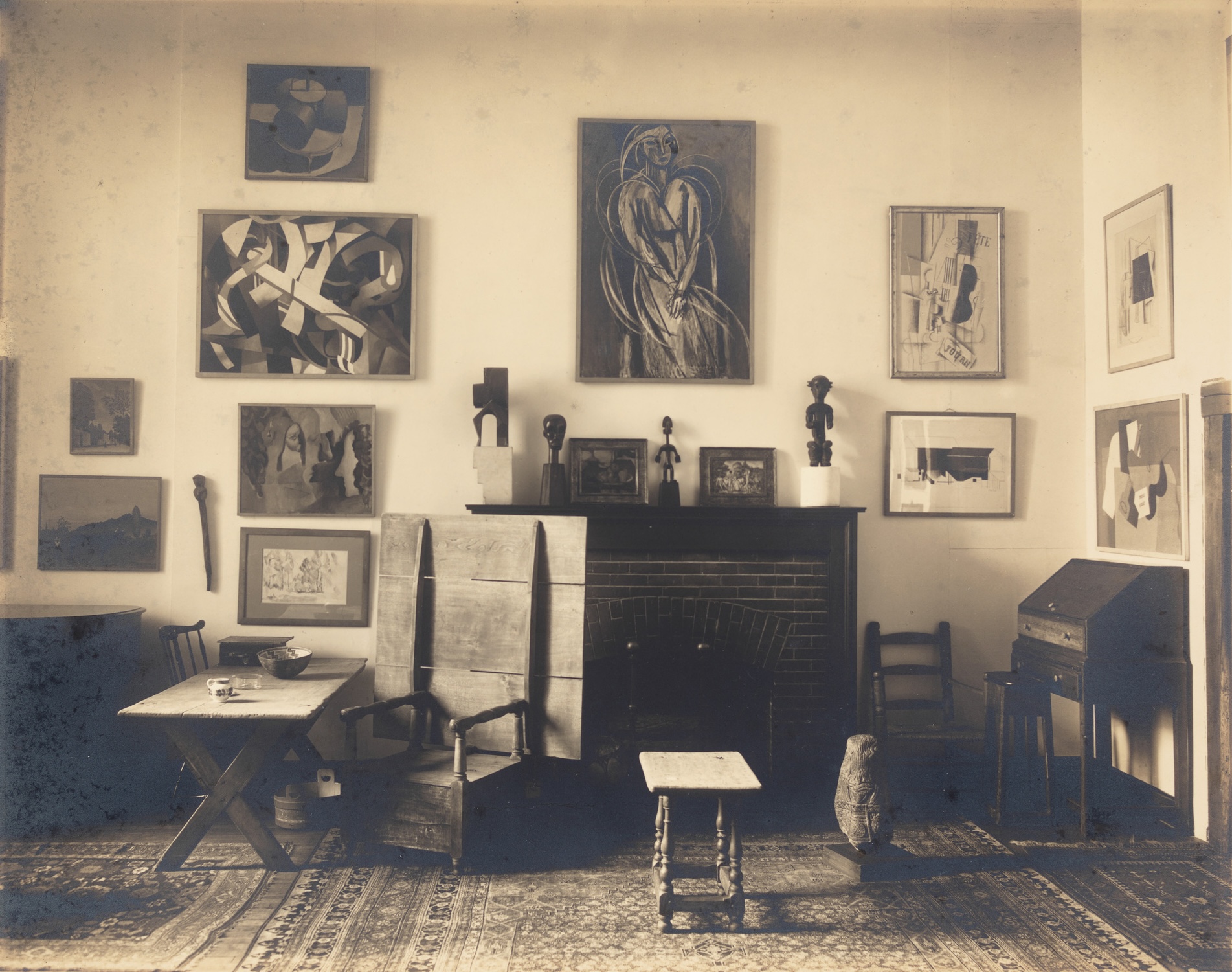
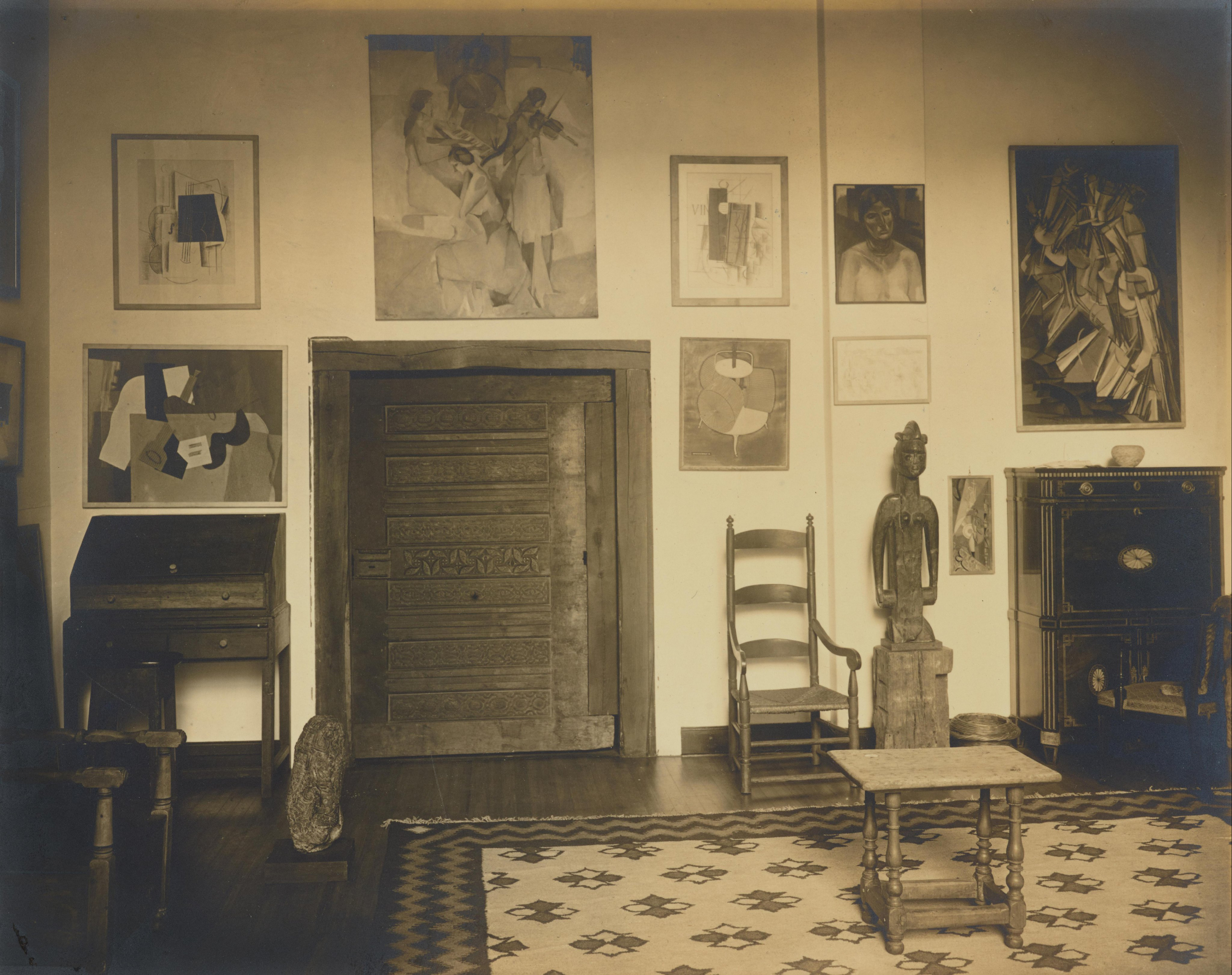
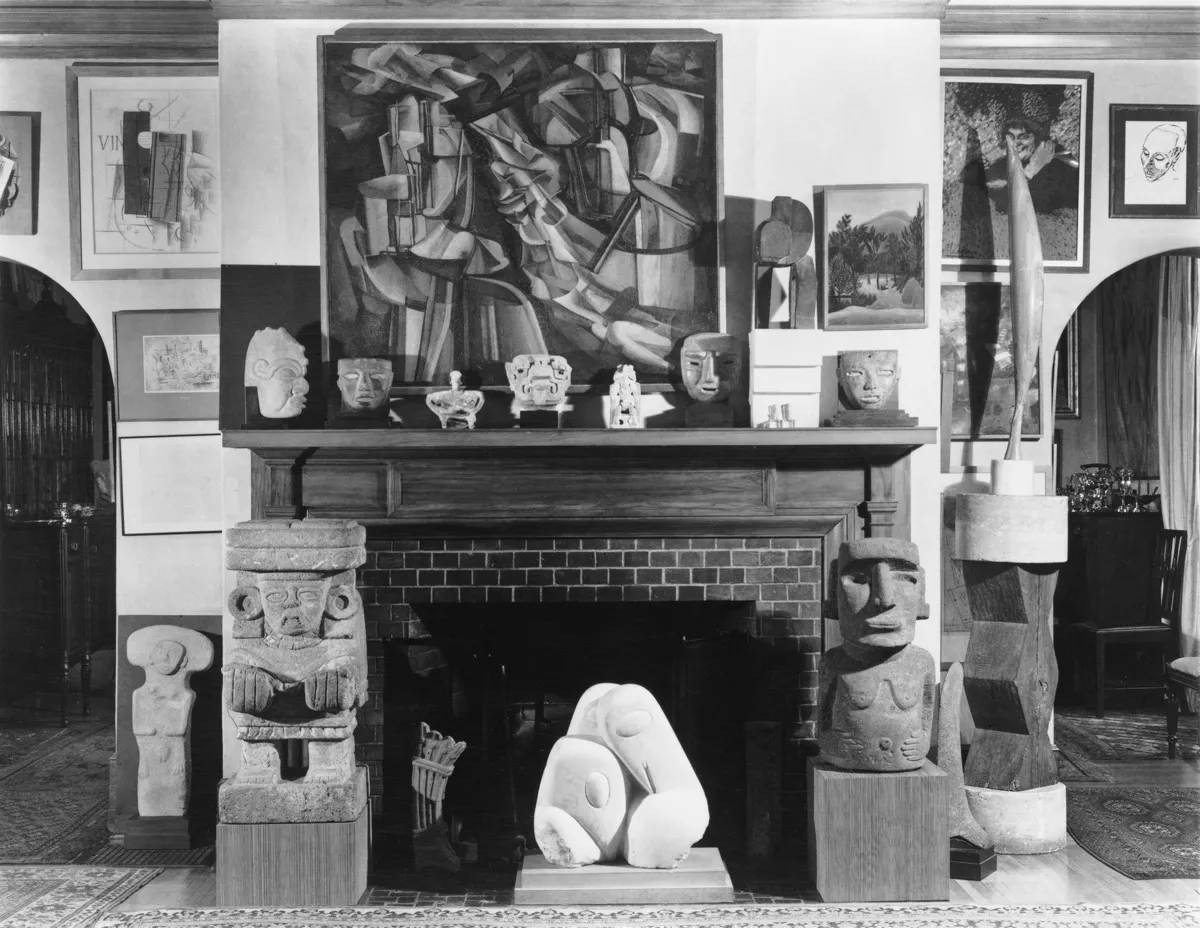
In 1927, the couple moved to their permanent residence at 7065 Hillside Ave. in Hollywood, California. Unlike their New York apartment, the 5,612-square-foot home had plenty of room for their art collection. “Paintings were jammed and crowded on every available space from floor to ceiling,” wrote New York Times art critic Aline Louchheim after her 1949 visit to the couple’s home. “They filled the porch, trembled on the backs of doors, [and] lined the bathrooms.” [4]
“Has the house ever been photographed? It should be documented from cellar to attic,” wrote MoMA curator James Thrall Soby in 1945. “The Arensberg pictures stand belligerently close together, but they do not fight. Their hanging breaks every museum precept of height, space and light, but you see them clearly, one by one, and remember them in detail for a long time afterward.” [5]
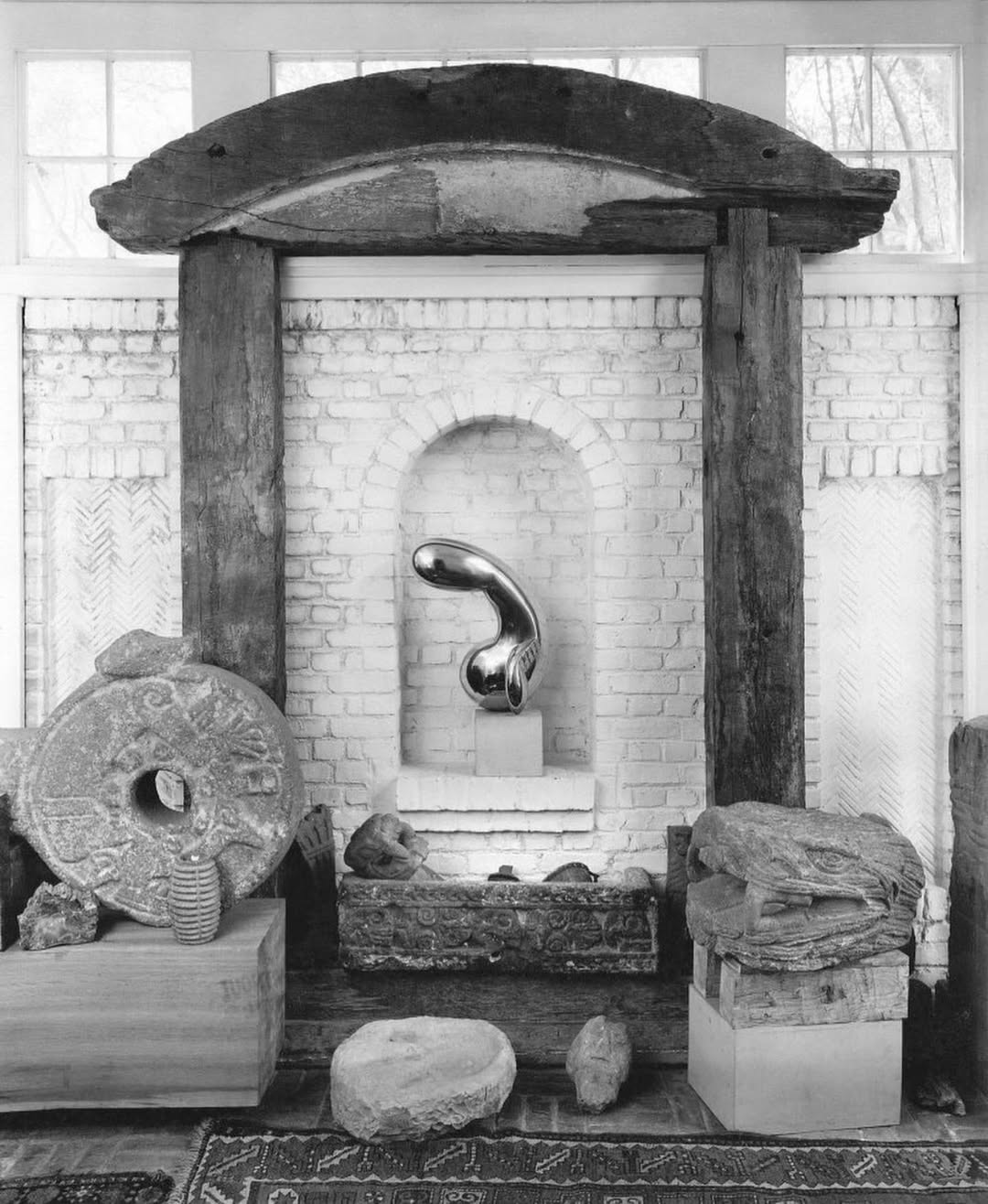
The Arensbergs commissioned a custom entryway for two Brancusi sculptures, “Arch” (ca. 1914–16) and the bronze “Princess X” (1915– 16). Arrangements of pre-Columbian sculptures were displayed alongside works by Duchamp, cubists Georges Braque and Pablo Picasso, and surrealists Salvador Dalí and René Magritte, along with roughly 4,000 rare books and manuscripts, including the world’s largest private library of writings by and about sixteenth-century British philosopher Sir Francis Bacon.
“I think we collected what we liked,” Walter told Kenneth Ross, a Californian modern art advocate, around 1951. “We never proposed or thought to make a collection. We suddenly found ourselves in a fix. We had a lot of things we liked.” [Ibid.]
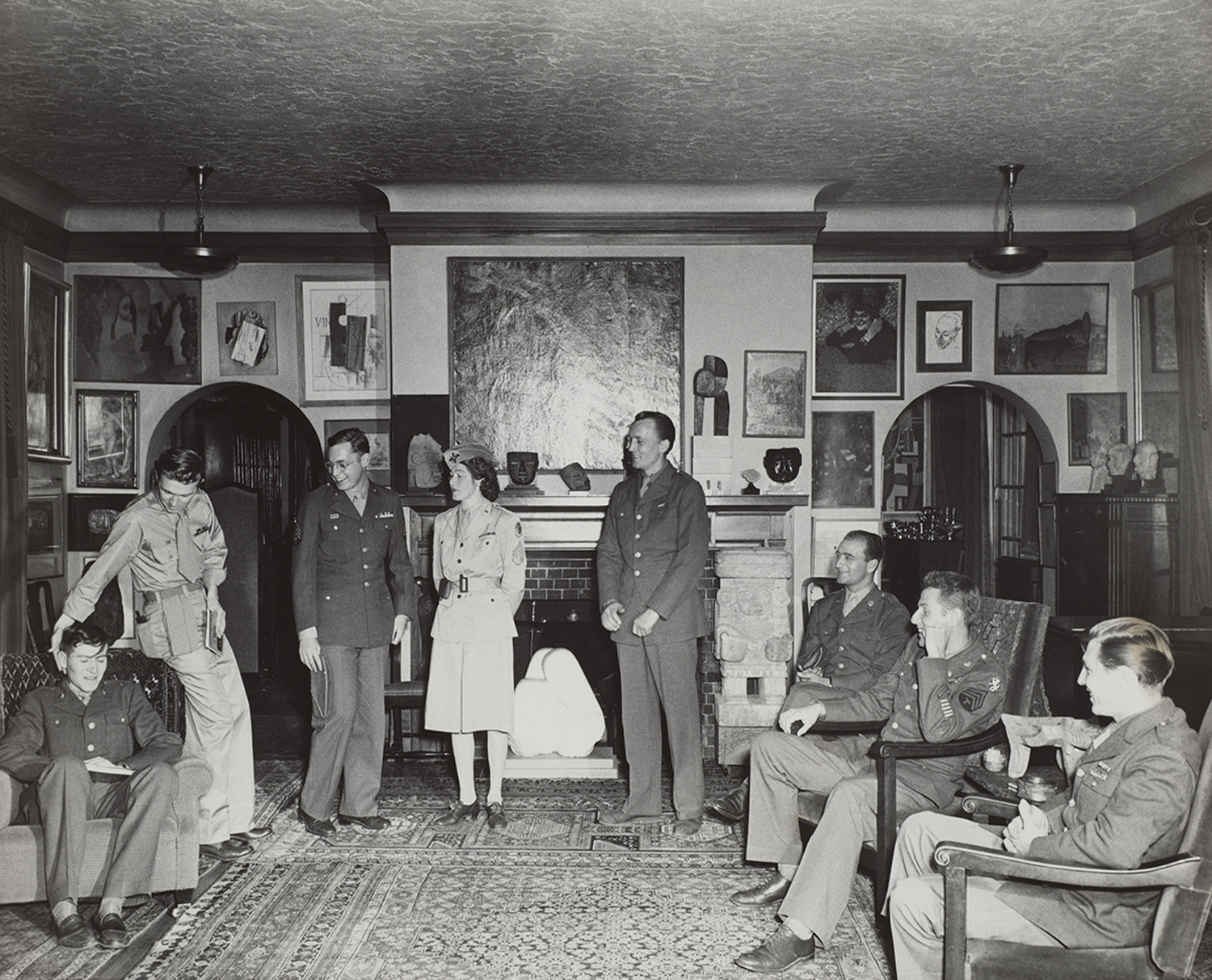
Los Angeles would not have a proper modern art museum until the Los Angeles County Museum of Art was established as a museum in 1961. The closest thing was the Arensbergs’ mansion, which they opened to interested parties like curator and gallerist Walter Hopps, who first visited as a teenager. He later recalled asking about the meaning of René Magritte’s “The Six Elements,” to which Walter Arensberg replied, “It means absolutely nothing.” Hopps would call the Arensbergs the “most important collectors ever in the Western United States.” [3]
In their later years, the Arensbergs struggled to find a permanent home for their collection. Finally, in 1950, their entire art collection was gifted to the Philadelphia Museum of Art. The rare books and archival materials that compose the Francis Bacon Foundation ended up at Claremont College, which now displays the works at the Huntington Library in San Marino. Louise died in 1953, and Walter died the following year.
Raised in Pittsburgh, where his father ran a steel manufacturing business, Walter studied English and philosophy at Harvard before traveling in Europe for a couple of years. He briefly worked as a reporter for The Evening Post in New York and published several volumes of experimental poetry. He returned to Boston in 1907 and married Mary Louise Stevens, whose wealthy textile manufacturing family had emigrated from Dresden in the early 1880s. [1]
The Arensbergs’ entryway into art collecting was the 1913 Armory Show, a blockbuster exhibition that introduced Americans to avant-garde European art. The couple acquired several pieces from the exhibition, including lithographs by Paul Cézanne and Paul Gauguin, as well as a small work by Jacques Villon (the eldest brother of Duchamp) on the insistence of art historian and critic Walter Pach, who helped organize the show and advised the Arensbergs. [Ibid.]
Walter, in particular, was taken with Duchamp’s “Nude Descending a Staircase (No. 2)” (1912). Initially ridiculed by many critics, the piece sold for $324 to a Californian art and antiquities dealer, Frederick C. Torrey. After the Armory show, the Arensbergs moved from Massachusetts to New York to be closer to the contemporary art scene, and they hosted legendary salons at their apartment at 33 West 67th Street. Drawing from mutual trust funds, the couple rapidly acquired art.
In the summer of 1915, the Arensbergs set up Duchamp in a studio apartment in their West 67th Street building. The rent was exchanged for the ownership of his masterpiece “The Bride Stripped Bare by Her Bachelors, Even.” The couple soon became the leading collectors of Duchamp, even commissioning him to create a full-scale copy of “Nude Descending a Staircase.” [2] The Arensbergs finally purchased the original “Nude" from Torrey in 1919. Walter collaborated with Duchamp on several readymade artworks, including “Comb” (1916) and “With Hidden Noise” (1916), wherein Walter inserted an unidentified object into a ball of twine screwed between two brass plates.
In 1921, the couple moved to California and sold “The Bride Stripped Bare by Her Bachelors, Even.” “It was the single greatest regret of their life that they sold it to [painter and patron] Katherine Dreier,” according to author Mark Nelson, “and the one thing they wanted back desperately.” [3]
In 1927, the couple moved to their permanent residence at 7065 Hillside Ave. in Hollywood, California. Unlike their New York apartment, the 5,612-square-foot home had plenty of room for their art collection. “Paintings were jammed and crowded on every available space from floor to ceiling,” wrote New York Times art critic Aline Louchheim after her 1949 visit to the couple’s home. “They filled the porch, trembled on the backs of doors, [and] lined the bathrooms.” [4]
“Has the house ever been photographed? It should be documented from cellar to attic,” wrote MoMA curator James Thrall Soby in 1945. “The Arensberg pictures stand belligerently close together, but they do not fight. Their hanging breaks every museum precept of height, space and light, but you see them clearly, one by one, and remember them in detail for a long time afterward.” [5]
The Arensbergs commissioned a custom entryway for two Brancusi sculptures, “Arch” (ca. 1914–16) and the bronze “Princess X” (1915– 16). Arrangements of pre-Columbian sculptures were displayed alongside works by Duchamp, cubists Georges Braque and Pablo Picasso, and surrealists Salvador Dalí and René Magritte, along with roughly 4,000 rare books and manuscripts, including the world’s largest private library of writings by and about sixteenth-century British philosopher Sir Francis Bacon.
“I think we collected what we liked,” Walter told Kenneth Ross, a Californian modern art advocate, around 1951. “We never proposed or thought to make a collection. We suddenly found ourselves in a fix. We had a lot of things we liked.” [Ibid.]
Los Angeles would not have a proper modern art museum until the Los Angeles County Museum of Art was established as a museum in 1961. The closest thing was the Arensbergs’ mansion, which they opened to interested parties like curator and gallerist Walter Hopps, who first visited as a teenager. He later recalled asking about the meaning of René Magritte’s “The Six Elements,” to which Walter Arensberg replied, “It means absolutely nothing.” Hopps would call the Arensbergs the “most important collectors ever in the Western United States.” [3]
In their later years, the Arensbergs struggled to find a permanent home for their collection. Finally, in 1950, their entire art collection was gifted to the Philadelphia Museum of Art. The rare books and archival materials that compose the Francis Bacon Foundation ended up at Claremont College, which now displays the works at the Huntington Library in San Marino. Louise died in 1953, and Walter died the following year.
Author: Tobias Czudej
Image: Photos Courtesy of Philadelphia Museum of Art, Library and Archives, Arensberg Archives
Floyd Faxon: 1, 5, 9, 11
Charles Sheeler: 18, 19, 20, 22
Fred R. Dapprich: 6, 7, 8
Karl Bissinger: 10
Corporal F. W. Lumbord: 12
12.11.2025