The Dealer: Duveen
Author:
Tobias Czudej
Author: Tobias Czudej
10 June 2026
Duveen was born in 1869 above his family's antique shop in Hull, England. [2] The eldest of fifteen siblings, he began working with his father, Joseph Sr., at a young age. In 1886, 17-year-old Duveen was sent on his first trip to America to apprentice with his Uncle Henry at the family’s outpost in New York. By that point, the family had upgraded to a storefront in London. Their clientele grew to include nobility like the Prince of Wales, who commissioned the elder Duveen to arrange much of the decoration of Westminster Abbey for the Coronation. (Joseph’s father was knighted in the summer of 1908, soon before he died.)
By the turn of the century, Duveen was running the family business and specializing in art rather than antiquities or furniture as his father had. His timing was fortuitous: As Europe experienced a financial and agricultural depression, its aristocracies were eager to part with cultural heirlooms. Meanwhile, American millionaires yearned for culture and refinement beyond the robber baron label. Duveen was just the man for the job.
Duveen made a splashly debut by purchasing complete collections with little worry about exorbitant prices. First was Oskar Hainauer’s finely curated collection, for $2.5 million, and then in 1907, the banker Rodolphe Kann’s collection of Dutch masters in for just over $4 million. Duveen always kept buyers in mind, and he quickly dispensed with the Kann collection. J.P. Morgan spent $1 million on a Ghirlandaio and some minor works; Department store mogul Benjamin Altman took home a Vermeer, four Rembrandts, and some sculptures for $500,000; Arabella Huntington, widow of the railroad magnate Collis P. Huntington spent $2.5 million on a Rembrandt and some furniture. [1]
Virtually all the art being sold was coming from Europe, and Duveen traveled back and forth between Paris, New York, and London. There were, however, serious deterrents to bringing European artworks to America, like the U.S. Revenue Act of 1897, which charged a 20% tariff to import any artwork of more than 100 years old. But this balance shifted in 1909, when the Payne-Aldrich Act abolished the import tariff. The following year, Duveen and three of his brothers were charged in the United States with massive tax fraud, accused of lowballing values to reduce customs duties. [3] They paid a fine of $1.2 million and barely avoided jail time. [4]
Duveen made himself indispensable to his clients. He organized hotel accommodations and procured tickets for sold-out ships; He got his clients houses, or else suggested architects who would build a beautiful home with plenty of wall space for their collection. He knew who owned all the great paintings, and he was known to collude to pay off the butlers and chauffeurs on both ends of the deal in order to sniff out the whims.
The name Duveen was so valued that once a work of art passed through his hands, it was forevermore associated with his name, and its importance rose accordingly. In 1912, Duveen hired Bernard Berenson, an expert in Italian Renaissance painting and sculpture who had advised Isabella Stewart Gardner, to act as an authenticator. The certification from Berenson could significantly increase the value of a painting, and both financially benefited from this agreement. But their partnership was tumultuous, with one Duveen employee describing it as “constant bickering and at times outright antagonism.” [2]
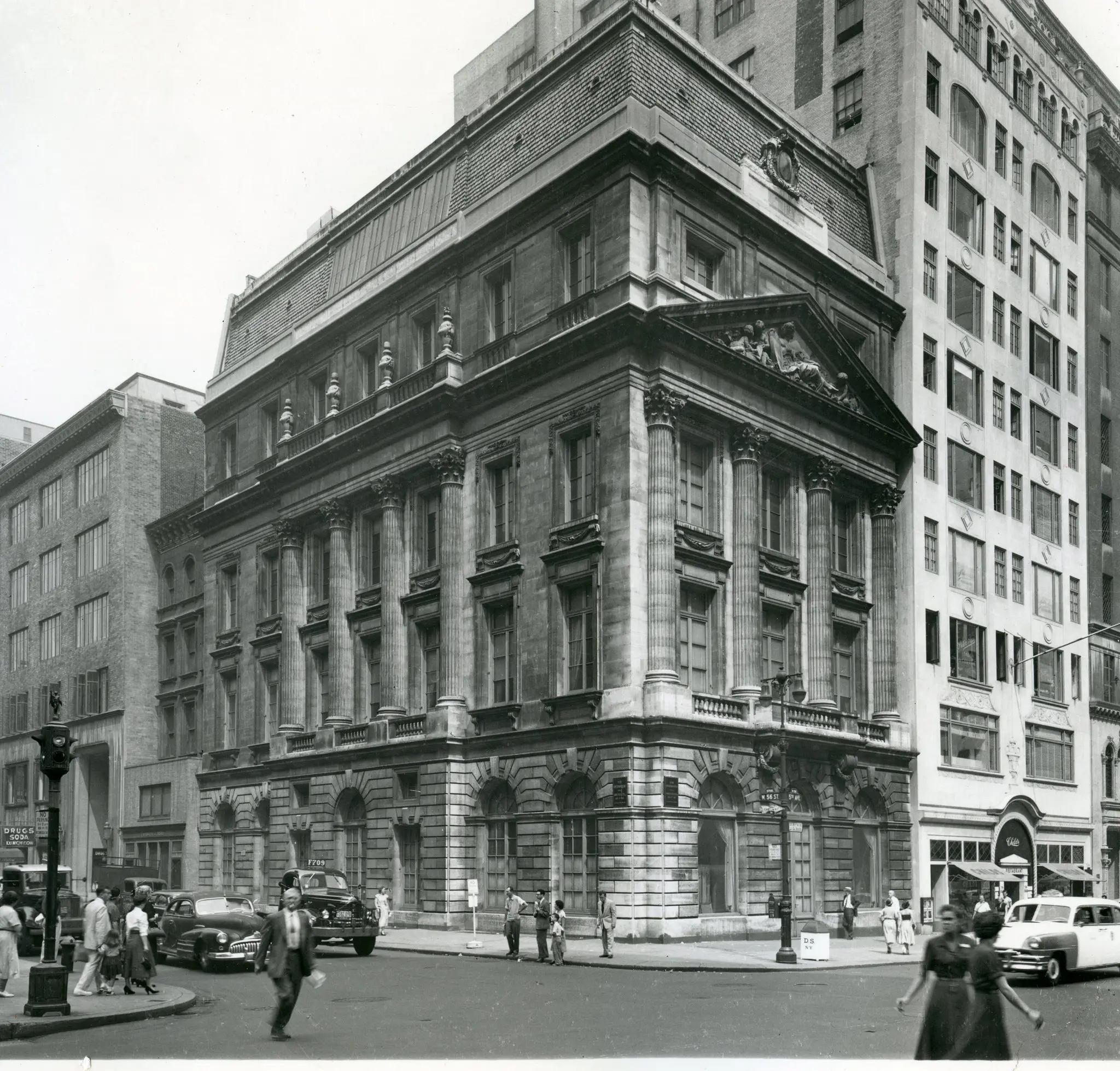
With World War I on the horizon, Duveen relocated to New York full-time and expanded his business, opening a large location at the corner of Fifth Avenue and West 56th Street. “When Duveen entered the American art market, he was barging into a narrow field and one that was dominated by long-established dealers,” S. N. Behrman wrote in 1951. [5] “Duveen not only barged into this field but soon preëmpted it, although, for the most part, his American clients didn’t especially care for him. ‘Why should they like me?’ he once asked one of his attorneys rhetorically ‘I am an outsider. Why do they trade with me?’”
The great American millionaires of the Era were slow in thought and speech, secretive, and cautious. Duveen found their lengthy pauses to be maddening. “For a man like Duveen, who was congenitally unable to keep quiet, the necessity of dealing constantly with cryptic men like the elder J. P. Morgan and Henry Clay Frick and Mellon was ulcerating.” [Ibid.]
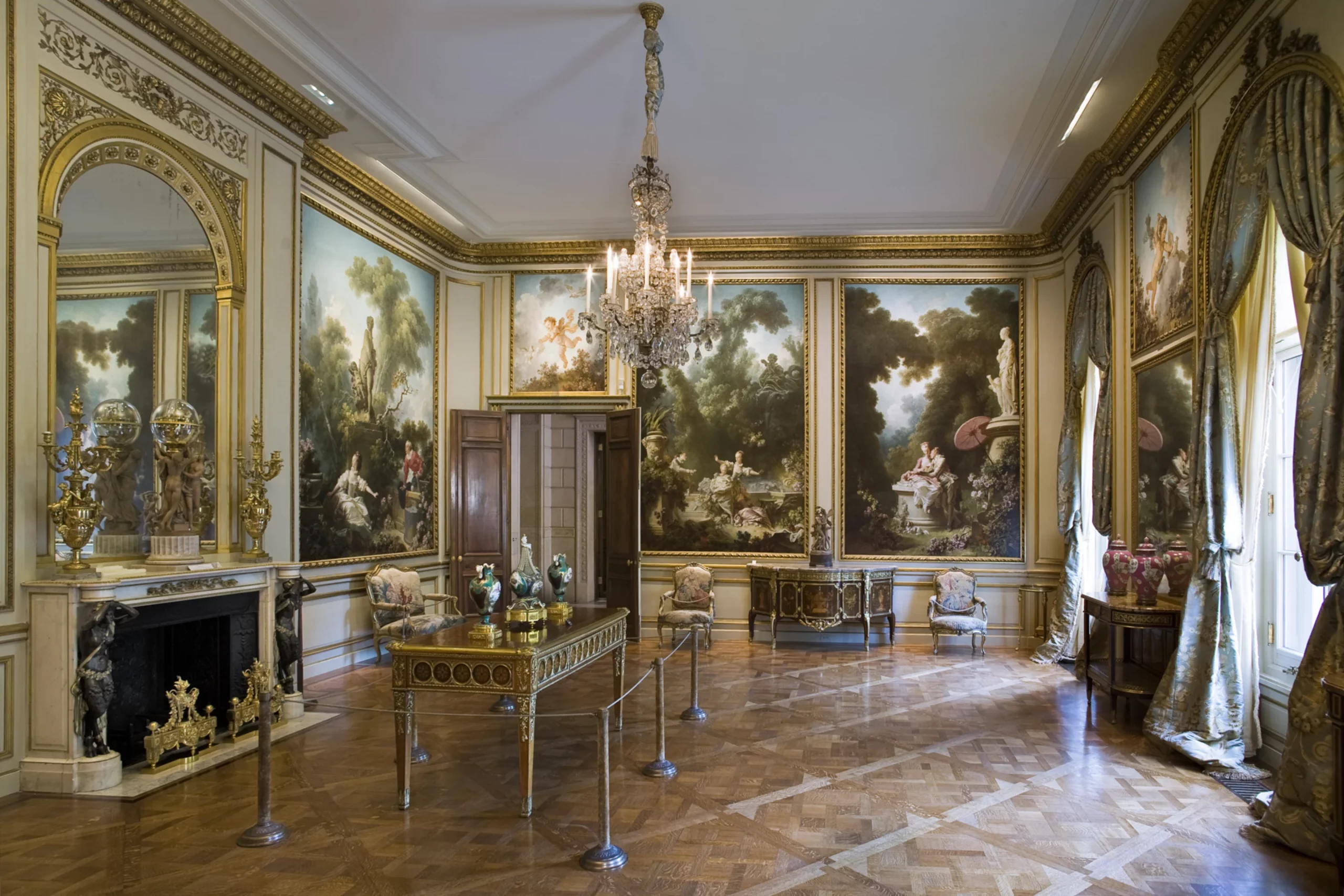
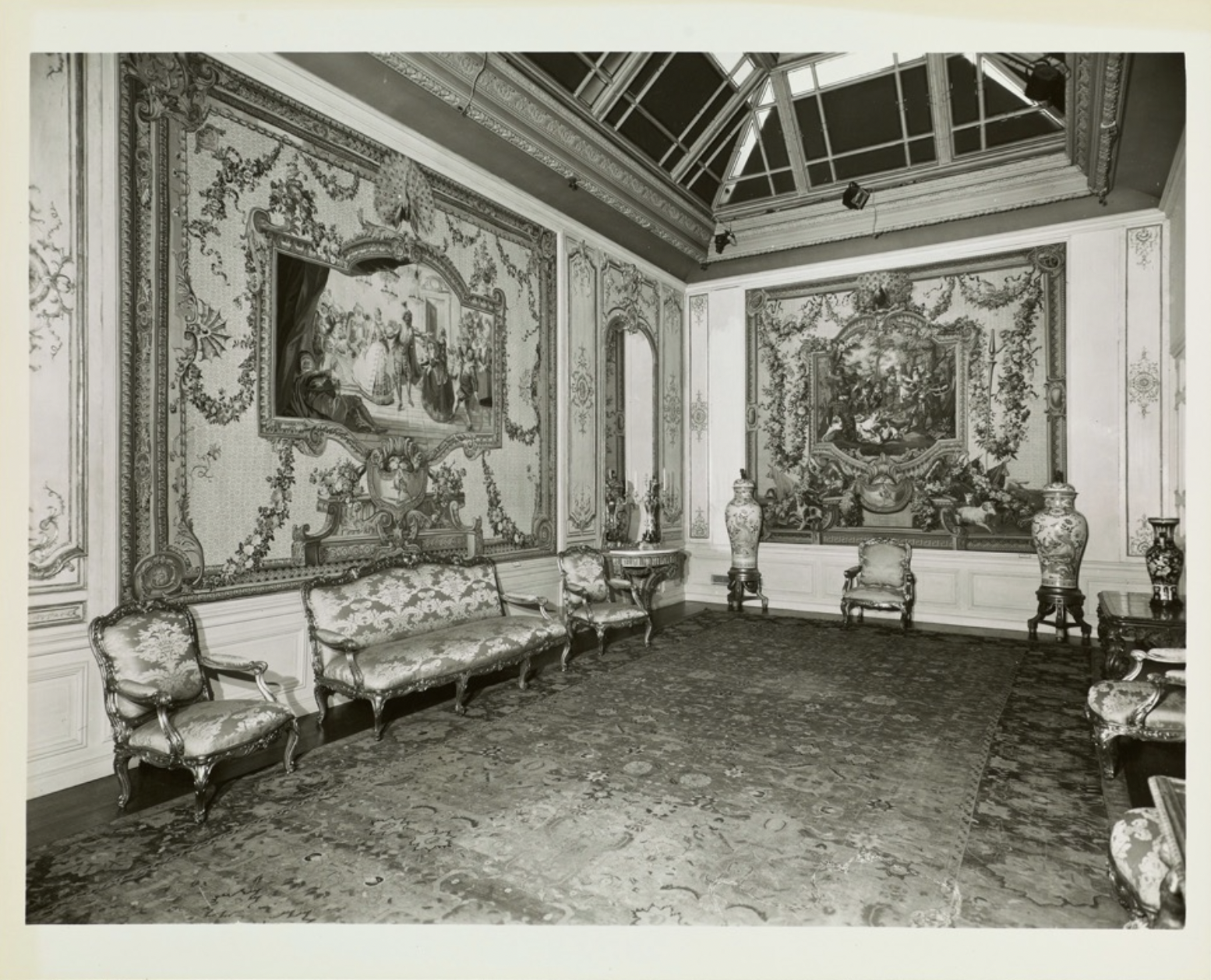
Duveen demanded exclusivity. When Frick was attempting to buy Thomas Gainsborough’s “Mall in St. James’s Park” through another dealer, Duveen made a few calls and bought it out from under them. He then listened to the lost painting. “‘Why, Mr. Frick,’ Duveen said, ‘I bought that picture. When you want a great picture, you must come to me, because, you know, I get the first chance at all of them.’” [Ibid.] Duveen would go on to advise Frick on countless purchases and decisions. It was Duveen who picked Thomas Hastings, of the firm of Carrère & Hastings, to design the Manhattan mansion that would one day become The Frick Collection. He also picked the decorator, Sir Charles Allom, who had been knighted by King George V for doing his place, and Duveen himself provided the paintings for the magnificent Fragonard and Boucher Rooms. Eventually, Duveen was advising the silverware at Frick’s table.
Duveen’s courtship of Andrew Mellon had been especially dogged, as the industrialist was a confirmed client of Duveen’s greatest rival, Knoedler’s. “Not only will Mellon buy from me but he will buy only from me,” Duveen once said. “And it won’t be on commission.” [6] He colluded with Mellon’s personal valet to have a surprise run-in, and eventually retained Mellon as a customer. Duveen was by his side in the 1930s as Mellon was creating the National Gallery of Art (NGA) in Washington. Or perhaps the museum had been the dealer’s idea: “It was a gleam in Duveen’s eye long before Andrew Mellon ever thought of it.” [Ibid.] Duveen wanted to provide the artworks, and he convinced Mellon’s downstairs neighbors in Washington to transfer their lease so dealings could not be avoided. Ultimately, Duveen was responsible for assembling the three collections—Widener, Mellon, and Kress—that comprise the bulk of the NGA.
When clients balked at his outrageous prices, Duveen convinced them that acquiring the irreplaceable, whatever the cost, was a worthwhile pursuit. A favorite saying of his was: “You can get all the pictures you want at $50,000 apiece, that’s easy. But to get pictures at a quarter of a million apiece—that wants doing!” [5] Duveen made one of his most notable deals in the early 1920s when he orchestrated the sale of Gainsborough’s “The Blue Boy” (ca. 1770) to the Huntingtons in California. Then considered among the most famous paintings in the world, its $728,000 (over $10 million today) price tag made it the most expensive painting ever sold at the time. [1]
In July, 1930, as art dealers struggled financially, Duveen shocked them all by paying $4.5 million dollars for the Gustave Dreyfus Collection. In 1934, Duveen offered a trio of busts from the Dreyfus Collection—a Verrocchio, a Donatello, and a Desiderio da Settignano—to John D. Rockefeller, Jr. for $1.5 million. When the businessman felt that the price was too high, Duveen countered by asking him to keep the busts at his residence for a year in the hopes that his feelings might change. Despite Rockefeller’s counter-offers, he ended up keeping the art for the full year and eventually met Duveen’s price. [5] Similarly, Duveen offered certain clients the guarantee that he would buy back an artwork for the original price, a strategy which allowed him to maintain his grip.
Duveen’s insistence on imposing his own vision occasionally led to catastrophe. In 1928, the British Museum accepted a donation from Duveen to build a new gallery to house the Elgin Marbles. But the dealer insisted that the sculptures be scrubbed clean before their installation, and all of their color and much of their detail was lost, causing uproar throughout Britain. With typically impeccable timing Duveen died in 1939 soon after the official opening of the Elgin Marbles was canceled. [1]
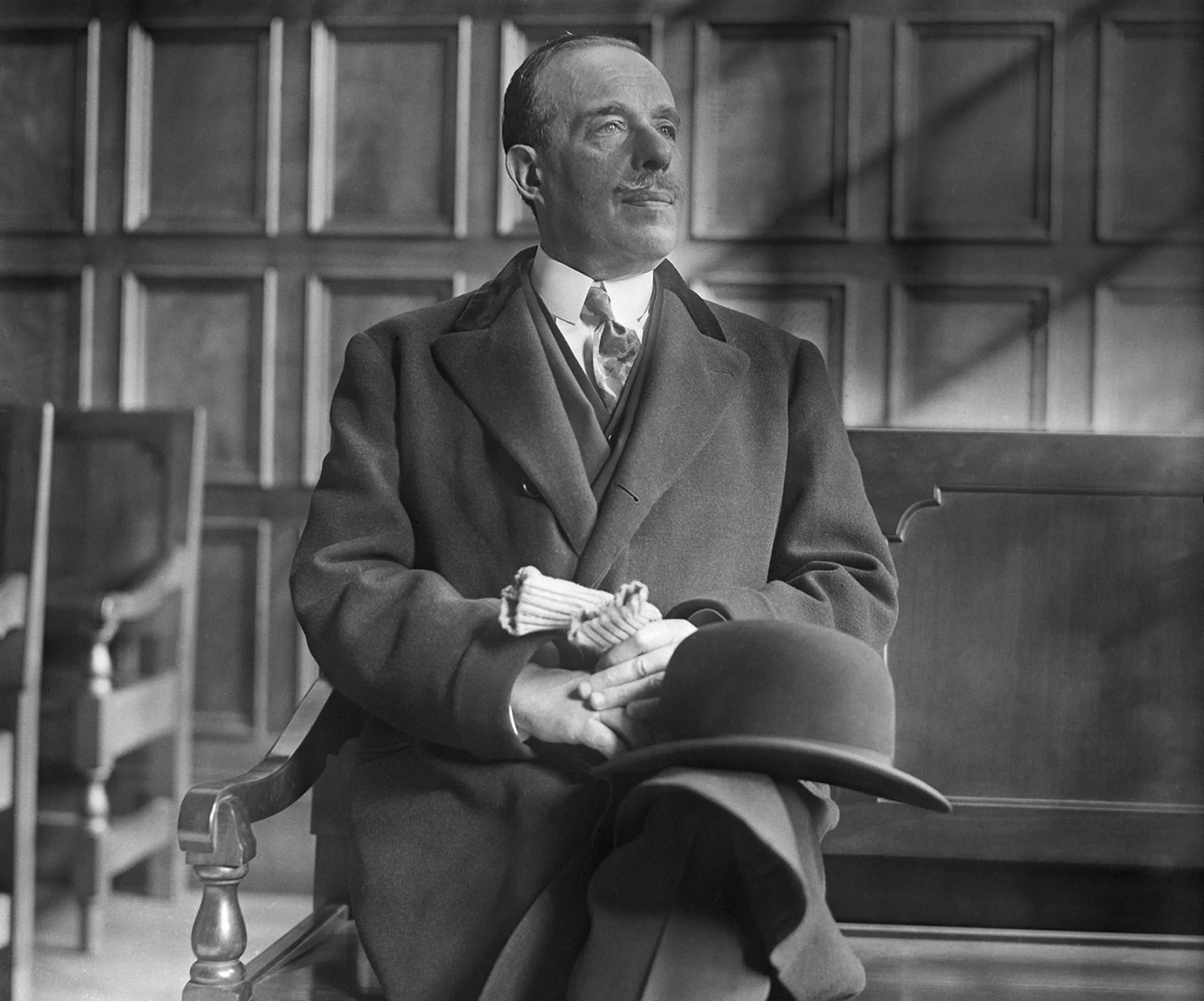
Image: Joseph Duveen as he appeared in court during trial of the action for libel brought against him by Mrs. Andree Lardoux Hahn of Kansas City, 1929. Photo by Bettmann/Contributor via Getty Images.
Author: Tobias Czudej
10 June 2026
Czudej McDonough Mailing List
Close